| Signal | Better decision |
|---|---|
| First cold week after open water | Wait for local confirmation and check multiple points before walking out. |
| Snow-covered or white ice | Treat thickness numbers more cautiously than clear black ice. |
| Narrows, inflow, outflow, bridge, pressure crack, or current | Avoid the area or check with someone who knows that exact water today. |
| Warm spell, rain, or strong wind | Shorten the trip, switch access, or postpone instead of relying on last week's report. |
Yes, You Can Fish in Winter, but Planning Matters More
Winter fishing is a normal part of the season across Canada, but it only works well when you plan around regulations, access, and weather before you pack the truck. Some waters stay open through winter, many lakes become ice-fishing waters, and some zones or species stay closed. Start with the season calendar and your province’s current regulations, not just with a fishing report.
For most anglers, the biggest mistakes are simple ones: assuming the same rules apply everywhere, trusting one ice report for an entire lake, or dressing for a short stop instead of a full day outside. Get those pieces right first and the rest of the day becomes much easier.
Read the Rules Before You Read the Ice
Winter fishing is not one national rule set. Seasons, line limits, bait restrictions, hut rules, and access conditions all vary by province and often by zone or waterbody. That is why the right workflow is always the same: confirm the water is open, confirm the method is legal, and then plan your access.
Ontario is a good example of how much the details matter. The province’s ice fishing guidance explains that anglers can use two lines through the ice in many waters, but the rule is tied to location and visibility requirements. Ice hut registration rules are also tied to specific fisheries management zones rather than applying everywhere in the province.
The same principle applies nationally. Your regular provincial fishing licence often covers winter fishing, but not every winter trip follows the same access path. National park waters, tidal fisheries, and some special waters can still use separate permits or local rules.
Ice Safety Comes First
Treat ice thickness numbers as a starting point, not as a guarantee. The Canadian Red Cross says a minimum of 15 cm of clear ice is needed for one person on foot, 20 cm for a group in single file, and 25 cm for a snowmobile or ATV. Ontario’s ice fishing page adds that light vehicles need 30 cm of clear ice, and that white or opaque ice is much weaker than clear ice.
Those numbers do not mean a lake is automatically safe once one test hole looks good. Current, springs, narrows, inflows, pressure cracks, snow cover, and warm spells can weaken one area while another part of the lake looks solid. Drill or check multiple points as you move and stay extra cautious early and late in the season.
If you cannot explain why the access point is considered safe today, or if locals are avoiding the area, that is enough reason to change plans. Winter fishing rewards patience. It does not reward stubbornness.
A Practical Approach to Winter Species
Walleye: Low-light windows still matter in winter. Focus on edges, breaks, and travel routes rather than covering the whole basin at random. Keep the presentation close to bottom and resist the urge to overwork the lure.
Perch: Mobility usually matters more than lure changes. Small jigs and a willingness to move until you find the school often beat sitting all day in one hole.
Lake trout and pike: These fish can cover water, so spread matters. If your regulations allow multiple lines, use them well. If they do not, fish with a clear plan rather than drilling dozens of holes without reading the structure.
In very cold periods, winter fishing often rewards slower, cleaner presentations. The fish are still catchable, but the day usually improves when you simplify your setup and stay on productive water instead of constantly changing gear.
Open-Water Winter Fishing Is Still an Option
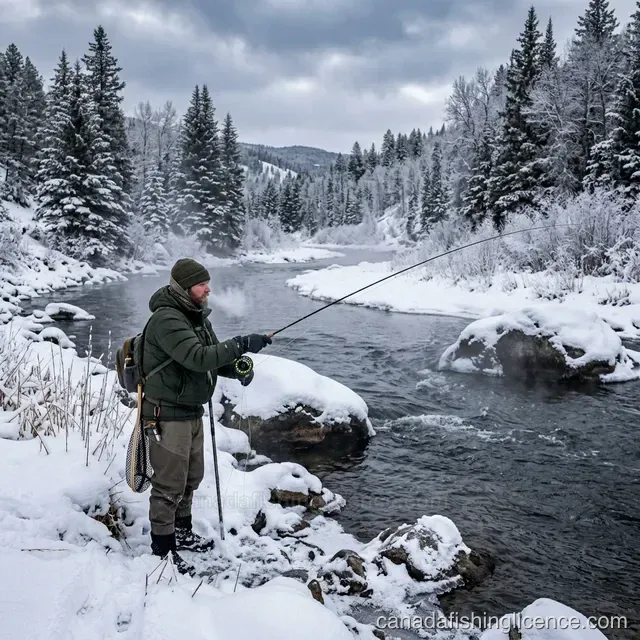
Not every winter trip happens on hard water. In some provinces, rivers, tailwaters, and selected flowing waters stay fishable through winter where regulations allow. The planning rule is the same: confirm the season, then confirm safe access before you go.
Open-water winter fishing usually rewards slower presentations, deeper holding water, and a later start than summer fishing. Midday can be the better window on very cold days because water temperatures and angler comfort both improve a little after the morning freeze.
If you are unsure whether your target river stays open, do not guess. Check the regulations summary for that zone or waterbody and keep a second plan ready in case conditions change overnight.
Dress for a Full Day, Not for the Drive
A simple layering system still does most of the work: a moisture-managing base layer, an insulating mid-layer, and a windproof outer layer. Warm boots, dry socks, face protection, and a spare pair of gloves matter more than chasing complicated gear setups.
The biggest comfort mistake is moisture. Sweating through the walk in, kneeling in slush, or handling fish with wet gloves can ruin the rest of the day. Pack spare gloves, spare socks, and something warm to drink before you start thinking about extra tackle.
If you are trying winter fishing for the first time, start with a shorter day close to town. Comfort and routine matter more than range in the early trips.
Huts, Shelters, and Overnight Assumptions
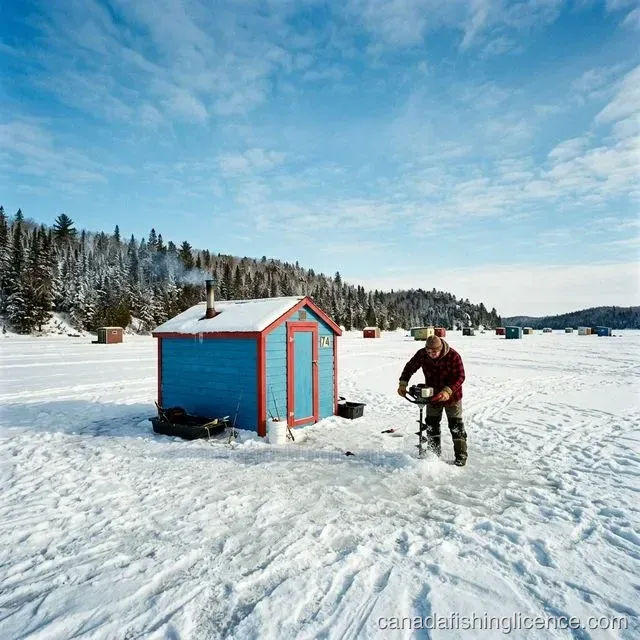
Shelter rules are one of the easiest places to make a preventable mistake. Ontario requires registration for ice huts in specific fisheries management zones. Manitoba Parks allows shelters on waters within provincial parks, but the province says they must be marked, cannot be used for overnight sleeping, and must be removed by published seasonal deadlines unless a conservation officer orders earlier removal.
That is why winter anglers should treat huts like any other regulated access item. Check whether registration is required, whether unattended placement is allowed, whether there are distance rules from shore or trails, and whether the lake sits inside a park with its own conditions.
If you are renting a hut from an operator, confirm what is included. A heated shelter solves comfort, but it does not replace your job to understand the licence, the season, and the local limits.
When It Makes Sense to Postpone
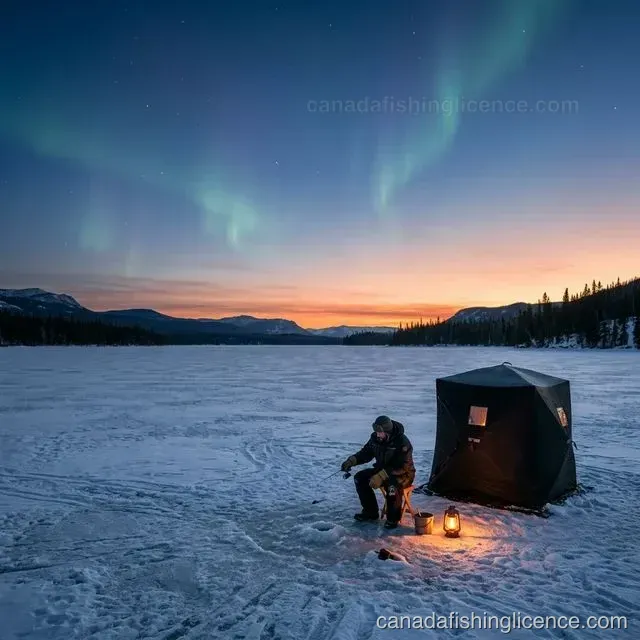
Postpone the trip when the access depends on rumor, when the weather is changing fast, or when you would be fishing alone on uncertain ice. A late start on known-safe water is better than an early gamble on a lake that has not settled yet.
The same goes for open-water trips. If banks are iced over, if the wading entry is questionable, or if visibility and wind make a recovery hard, switch to an easier-access spot or save the trip for another day.