| Rule branch | What changes |
|---|---|
| Base freshwater licence | The ordinary provincial licence is enough for many trout, bass, and general freshwater fly trips. |
| Method restrictions | Some rivers or sections are fly-fishing-only, single-barbless only, bait-ban waters, or catch-and-release waters. |
| Species-specific additions | Steelhead, salmon, and some retained species can require extra stamps or a separate salmon licence. |
| Separate management systems | B.C. tidal waters, national parks, and some controlled salmon waters use a different permit or access path from ordinary provincial freshwater fishing. |
Usually No Separate Fly Fishing Licence
Canada does not generally use a separate fly fishing licence. In most situations, the same recreational fishing licence covers spinning, bait fishing, and fly fishing. The difference is not usually the base licence. The difference is the water you choose and the extra rule chain that comes with it.
A simple stocked-trout day on ordinary provincial water can be straightforward. A steelhead trip on a British Columbia classified water, an Atlantic salmon trip in Quebec, or a non-resident salmon trip in New Brunswick is not the same decision. Those trips can add classified-water licences, conservation surcharge stamps, salmon licences, guide-required access rules, or even a separate tidal or park permit system.
The safest way to think about fly fishing in Canada is this: start with the water, then match the licence path to the water. That approach works better than asking for one national fly-fishing licence that does not really exist.
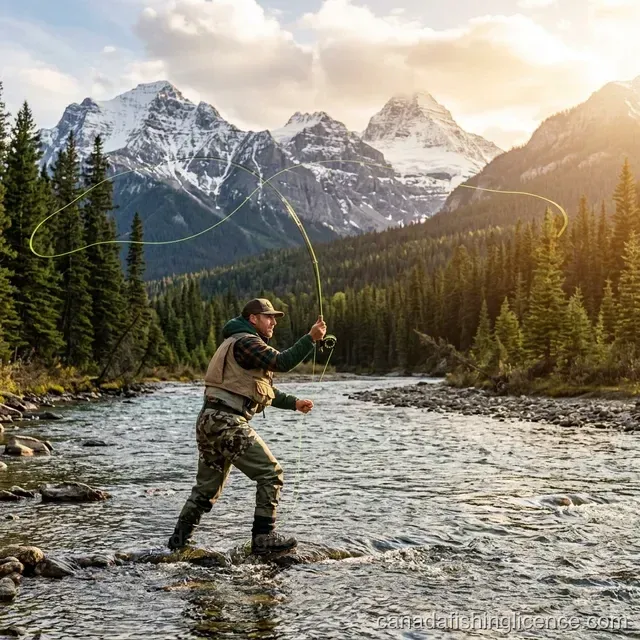
Four Rule Branches Matter More Than The Fly Rod
Most fly-fishing planning problems fall into four buckets:
That is why a short trout day and a destination salmon trip should not start from the same checklist, even if both days use a fly rod.
British Columbia Is Where Extra Fly-Fishing Rules Show Up Most Often
British Columbia keeps the clearest split between ordinary freshwater licensing and the extra permissions that matter on well-known fly waters. Freshwater licences are linked to your Fish and Wildlife ID (FWID) profile, and anglers must carry their FWID and photo ID while fishing.
For many trout trips, the ordinary freshwater licence is enough. The difference begins when the river is managed as a classified water or when the trip targets species that trigger a conservation surcharge. On those waters, B.C. can require a Classified Waters Licence, a Steelhead Conservation Surcharge Stamp, or a Salmon Conservation Surcharge Stamp depending on the river, species, and season.
This matters most on the trips readers usually picture first when they think about fly fishing in B.C.: Skeena-system steelhead planning, classified trout rivers, and salmon-related freshwater trips. Those are not buy-the-basic-licence-and-go situations. They are read-the-river-first situations.
What Classified Waters Change In B.C.
Classified waters are B.C.’s clearest example of why the fly-fishing licence question is really an access and regulation question. When a stream is classified during a certain period, the classified-water rules sit on top of the base freshwater licence.
For non-resident anglers, B.C. says classified-water licences are water-specific and date-specific, generally for periods of up to 8 consecutive days. That alone can reshape a trip plan, because it turns river choice and timing into part of the licence purchase rather than something you settle later.
B.C. also says that if you hold a conservation surcharge stamp, you must carry an unmodified paper or digital copy of your licence. In practice, that means a B.C. fly trip should be organized around the exact river, exact dates, and exact retention or conservation rules before you leave home.
Quebec Uses A Separate Salmon Path
Quebec keeps ordinary sport fishing and salmon fishing on separate licence paths. The province’s fishing licence page covers the general sport-fishing licence, while its salmon pages describe the separate salmon licence products and the rules that apply on salmon rivers.
That structure matters because many visitors picture a Quebec fly trip as “just another trout or salmon river day.” It often is not. On salmon rivers, the licence question can expand into river sectors, controlled stretches, ZEC access, outfitter access, and season-specific salmon rules. The fly rod is the easy part. The planning work sits in the licence and access chain.
If the trip is a Quebec salmon river trip, treat it as a salmon decision from the start. If it is an ordinary inland trout trip, use the general Quebec sport-fishing path instead of assuming the salmon rules belong to every fly-fishing day in the province.
New Brunswick Adds The Guide-Required Waters Question
New Brunswick is the province where non-resident fly anglers should slow down before booking a salmon river. The province uses separate pages for non-resident angling licences, guide-required waters, and tidal waters because those three checks can all matter on the same trip.
For inland Atlantic salmon planning, the key point is that New Brunswick does not treat the salmon question as a small add-on to the standard angling licence. A salmon trip can require its own salmon-licence path and, on certain waters and dates, a licensed guide or an eligible accompanying New Brunswick resident under the guide-required-waters rules.
That is why a Miramichi-style visitor trip should be planned in this order: confirm the river, confirm whether the section is guide-required for your dates, then settle the licence and access details. If the trip also reaches tidal water, the rule chain changes again, because New Brunswick says no provincial angling licence is required in tidal waters.
Tidal Water And Park Water Are Separate Fly-Fishing Decisions
Two other systems can interrupt the normal freshwater-fly workflow even when the day feels like part of the same trip.
B.C. tidal water: Fisheries and Oceans Canada manages the B.C. Tidal Waters Sport Fishing Licence separately from the provincial freshwater system. DFO says you must have a valid tidal waters licence in your possession while fishing or transporting your recreational catch, and you also need a salmon conservation stamp if you plan to retain salmon. DFO further says retained chinook salmon, halibut, and some lingcod catches must be recorded immediately, and if you are outside cell range you may need to record them on paper rather than relying on an online connection.
National parks: Parks Canada uses a national park fishing permit rather than the ordinary provincial licence. In Banff, Parks Canada also says felt-soled boots are not permitted. That single detail is enough to make some otherwise normal fly gear unusable once the trip crosses into park water.
How To Choose Your First Fly-Fishing Trip In Canada
For a first Canadian fly-fishing trip, the easiest route is usually not the most complicated river in the country. It is the river or lake where the licence chain is shortest and the rules are easiest to carry correctly for a full day.
That usually means one of three starting points: a simple provincial trout water with a basic freshwater licence, a guided day on a river where the guide already knows the method restrictions, or a park or destination trip where you are willing to buy the proper permit and keep the day simple. What makes a first trip workable is not prestige. It is whether you can name the water, understand the rule chain, and carry the right documents without guessing.
If you are still deciding between provinces, the shortest fly-fishing learning curve usually comes from one licence system, one main species, and one water type. A first trip built around B.C. freshwater plus B.C. tidal plus a national park stop often creates more paperwork than fishing time.
What To Carry So The Day Stays Simple
For a straightforward fly day, carry the same things you would expect on any regulated Canadian fishing trip: the licence or permit that matches the water, photo ID where the system requires it, and any extra stamp or access document that belongs to that fishery.
In B.C. freshwater, that can mean your FWID, photo ID, freshwater licence, and any conservation surcharge stamp. In B.C. tidal water, it can mean the tidal waters licence plus a catch-record system that still works when there is no signal. In Quebec or New Brunswick salmon planning, it can mean a separate salmon path and access documents rather than just the ordinary angling licence.
This sounds basic, but it is still the easiest way to keep a fly trip from turning into a rule problem. A Canadian fly-fishing day goes more smoothly when the paperwork is organized around the water before the waders ever come out of the truck.