| Starting side | Canadian fishing region | Why it works for a day trip | Main watchout |
|---|---|---|---|
| Detroit / Toledo / SE Michigan | Windsor, Detroit River, Lake St. Clair, nearby Lake Erie access | Very short drive from the crossing to Ontario water and launches | Check the exact Ontario fisheries management zone if you move between systems |
| Buffalo / Niagara Falls | Niagara River corridor and nearby Ontario harbours | One of the simpler Ontario same-day options from New York | Boat anglers need to track the international boundary carefully |
| Blaine / Bellingham / Seattle side | B.C. Lower Mainland freshwater or tidal trips | Close access to both river and saltwater planning | Freshwater and tidal licences are separate systems; some fisheries use in-season notices |
| Vermont / New Hampshire border | Quebec Eastern Townships waters | Good fit for lake-based day trips close to the line | Quebec zones and local access rules still vary by waterbody |
| Minnesota / North Dakota border | Northwestern Ontario or southern Manitoba | Possible when the water is close to the crossing and the launch is simple | Large border waters and remote-entry routes often stop feeling like true same-day trips |
A Same-Day Trip Needs A Simple Border And Nearby Water
A same-day fishing trip into Canada can work very well if the border crossing is straightforward, the water is close to the crossing, and the licence path is clear before you leave home. The most practical trips are usually not the most remote ones. They are the ones where you can buy the licence cleanly, cross efficiently, and get on the water without solving three different rule systems on the fly.
For most U.S. anglers, that means carrying a passport or passport card, buying the non-resident licence in advance, checking the official border wait tool, and choosing water that does not depend on special boat reporting or last-minute fishery notices. When those pieces line up, a day trip is realistic. When they do not, the trip usually wants to become an overnight.
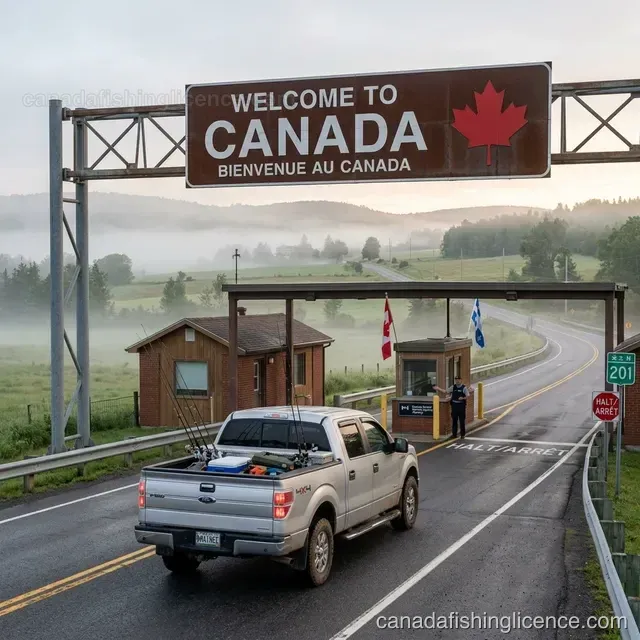
Know What ArriveCAN Does and Does Not Do
ArriveCAN is no longer a mandatory pre-entry step for land-border fishing trips. Canada’s current ArriveCAN guidance says the Advance Declaration feature is an optional time-saving tool for travellers arriving at participating airports. It is not the thing that makes a land crossing possible.
That is useful because it lets you focus on the real planning steps: travel document, fishing licence, border timing, and any special rules for the water you plan to fish.
Five Border Regions That Actually Make Sense for Day Trips
The reason these regions work is not hype. It is logistics. They let you use a normal land crossing and reach fishable water without wasting half the day on transfers, special reporting rules, or complicated permit questions.
The Licence Examples Worth Checking Before You Leave
| Trip type | Official day-trip fee example | Why this matters |
|---|---|---|
| Ontario freshwater | $24.86 for a 1-day sport licence | Ontario has a direct same-day licence path for many Great Lakes border trips because the 1-day licence does not require an Outdoors Card |
| B.C. freshwater | $22.86 for a 1-day non-resident alien licence | Good for Lower Mainland or interior freshwater day plans, but still requires FWID setup in WILD |
| B.C. tidal waters | $8.62 for a 1-day non-resident tidal licence | Useful for simple saltwater outings, but salmon retention and some special fisheries add extra conditions |
| Quebec freshwater | $22.36 for a 1-day non-resident licence | Keeps Eastern Townships and nearby waters realistic for short trips |
| Saskatchewan freshwater | $28 for a 1-day non-resident licence, plus $5.25 short-term habitat certificate when it applies | Relevant when the trip pushes into Prairie border country rather than the Great Lakes or Pacific side |
These are not every possible fee in Canada. They are the day-trip examples most likely to help you decide whether a quick border trip is worth the time, and they come directly from current official pages.
Detroit and Buffalo Side Trips: Ontario Is Usually the Cleanest First Choice
For anglers coming from southeast Michigan or western New York, Ontario is often the simplest place to compare because the licence path is clear and the water is close to the crossings. The 1-day Ontario sport licence avoids the extra Outdoors Card step, which makes it practical for short-notice or first-time trips.
That does not mean every Ontario day trip is automatically simple. You still need the right fisheries management zone, local access, and current regulations. For a short border crossing with real same-day water, Ontario stays high on the list for practical reasons.
Washington to British Columbia: Decide Freshwater or Tidal Before Anything Else
The Lower Mainland gives U.S. anglers something many other border regions do not: realistic access to both freshwater and tidal trip styles from the same general crossing corridor. That is attractive, but it is also where many planning mistakes begin.
If the trip is river or lake based, start in B.C.’s freshwater system and make sure the FWID setup is done before the travel morning. If the trip is saltwater, move directly into the DFO tidal path. Do not wait until the parking lot to decide which system applies.
This region is also a good example of when a “day trip” needs an honesty check. If the plan depends on in-season notices, retention rules, or combining freshwater and tidal fishing in one day, the trip can still work, but it is no longer a simple first-timer run.
Quebec Border Trips Need A Narrow Water Choice
Quebec can make an excellent same-day option from Vermont or northern New England, especially if the plan is a focused lake or river trip rather than a broad touring day. The province’s one-day non-resident licence keeps the cost barrier reasonable, and the sport-fishing system is available in English.
The main planning difference is that Quebec rewards a narrower trip plan. Choose the waterbody first, then check the local zone and access rules. A vague “we will just cross and figure it out” approach is much less useful here than it is on a familiar Ontario border route.
Prairie and Boundary-Water Trips Need a Reality Check
Border-country trips out of Minnesota and North Dakota can be excellent, but this is where the phrase “day trip” starts to hide complexity. Large waters, remote launches, mixed province choices, and private-boat reporting rules can turn a simple plan into a longer logistics day very quickly.
If the trip involves Lake of the Woods, remote-entry routes, or water crossings rather than a plain land crossing and ramp, stop and ask whether this is really a first-day same-day trip or whether it wants to be an overnight. Asking that early is often what saves the whole plan.
What to Check the Night Before
Border timing: Use CBSA’s official border wait-times page rather than guessing when the crossing will be quiet.
Travel document: Carry the document you actually plan to use at the booth, not a copy or backup idea.
Licence file: Save the licence PDF or official licence summary where it works offline.
Water-specific rules: Read the local regulations and any special notices for the exact water or zone.
Boat or private-water reporting: If the trip is by private boat or touches a border water, confirm whether extra reporting rules apply.
Coming Home the Same Day
The trip is not over when you pull out of the launch. On the return to the United States, CBP requires travellers to declare animal and plant products, which means fish and bait should never be treated as invisible cargo.
If you are returning by private boat, CBP says the operator must report U.S. arrival immediately, and CBP ROAM is one accepted method. If you are driving back, keep the fish, licence, and travel documents easy to reach so the border conversation stays simple.