Canadian Ice Fishing Guide 2026
Licence basics, two-line limits, ice hut deadlines, and cross-border bait rules for anglers planning a winter trip in Canada.
There is usually no separate 'Ice Fishing Licence' in Canada. The normal licence or permit for the water is still the base document. Winter adds separate checks for line limits, bait, shelter registration or identification, removal dates, park waters, and local ice conditions.
- The base fishing document usually follows the water, not the season
- Short-term visitor products vary by province
- Ice line limits vary by province, zone, and waterbody
- National Parks require a separate federal licence
- Do not bring live bait across the US border
1. Licence Basics: Which Permit Do You Actually Need?
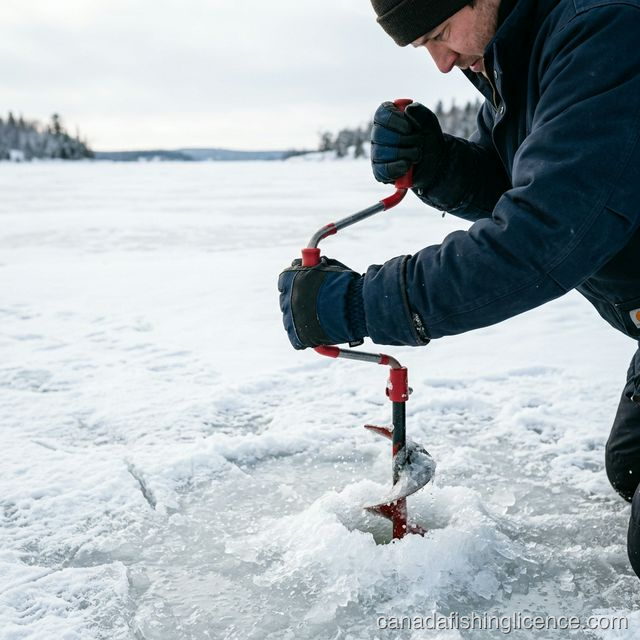
The most common question anglers ask when the lakes freeze over is: "Do I need to buy a special winter tag?" In most provinces, the answer is no. Canada's provincial fisheries generally treat the hardwater season as part of the regular fishing year.
Sport vs. Conservation Licences in Winter
If you are fishing in provinces like Ontario or Manitoba, you still face the choice between a Sport Fishing Licence (full catch limits) and a Conservation Licence (reduced catch limits). In winter, that choice should follow the fish you may legally keep, the reduced limits on the licence, and how you plan to handle released fish in cold air. If you only expect to keep a small meal of panfish, a reduced-limit licence may be enough. If you want full harvest limits, choose the full-limit product where the province offers one.
National Parks Need a Different Permit
A provincial licence may be the right base document on many ordinary provincial waters, but it does not cover every winter trip. If your ice fishing trip takes you inside a federal park such as Banff, Jasper, or Prince Albert National Park, your provincial licence does not replace the park permit. You need the appropriate National Parks Fishing Licence from Parks Canada.
2. Gear Regulations: The "Two-Line Rule" and Tip-Ups
Winter drastically changes the gear footprint. While open-water fishing is almost universally restricted to one rod per angler, ice fishing offers relaxed line limits in exchange for strict attendance rules.
The Two-Line Question: Ontario, Manitoba, Alberta, and Saskatchewan commonly allow two lines through the ice, but the distance, visibility, hook, and waterbody rules are not identical. A tip-up beside a jigging rod can be legal in one setup and wrong in another.
The Line of Sight Law
Do not drill a hole, set a tip-up, and walk away. Lines through the ice usually need to stay attended, visible, and within the distance set by the province or zone. Check the exact distance rule before spreading lines across the ice.
Ice Hole Diameters: Some provinces or local rules limit ice hole size to reduce hazards for snowmobilers, skiers, and pets. Check the local rule before drilling oversized or connected holes.
3. The Non-Resident Guide: Planning an American Ice Trip
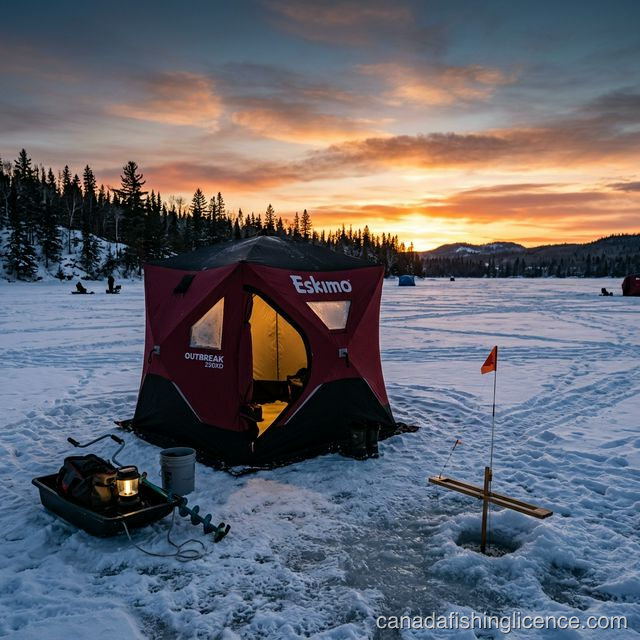
Many American anglers cross the border into Ontario and Manitoba each winter for Walleye, Yellow Perch, and other cold-weather trips on well-known waters such as Lake of the Woods, Lake Simcoe, and Lake Winnipeg.
The 8-Day Licence: For non-residents, an annual licence is usually unnecessary for a short trip. In provinces that offer an eight-day option, it is often the practical middle ground for a three- or four-day visit.
Do not pack minnows, leeches, or crayfish from an American tackle shop in your cooler. Border rules generally do not allow live bait to be brought into Canada, partly to reduce the spread of fish disease and invasive species. Buy bait locally within the bait zone where you plan to fish, and keep the receipt if local rules require it.
4. Ice Hut Registration and March Removal Deadlines
If you are using a small temporary fabric shelter and taking it home with you each day, the rule can be much lighter than it is for a hard-sided hut left on the ice. Ontario, for example, exempts fabric tents of 7 square metres or less from registration, while larger fabric shelters and non-fabric huts in listed zones need the ice-hut number.
If you tow a hard-sided shack onto the lake or leave any shelter unattended, treat it as a regulated shelter question. Registration, outside identification, and removal rules vary by province and sometimes by zone.
- Identification Sizes: In Ontario, the ice-hut registration number must be displayed on the exterior at least 6.3 cm (2.5 inches) high. Other provinces use different owner-name, customer-ID, or phone-number marking rules.
- Environmental Fines: Blocking (the wood blocks used to keep the hut from freezing to the lake) and all trash must be entirely removed. If your hut is left out past the deadline and breaks through melting ice, environmental cleanup costs and penalties can apply.
2026 Ice Hut Removal Deadlines by Province
These dates are planning cutoffs, not permission to stay on unsafe ice. Remember: ice conditions matter more than the calendar. If an early spring thaw occurs, local authorities may require earlier removal.
| Province | Removal Deadline | Specific Identification Rules |
|---|---|---|
| Ontario (ON) | March 1 (FMZ 17, 20) / March 15 (FMZ 14, 16, 18, 19, FMZ 12 below dam) / March 31 (FMZ 9-11, 15, FMZ 12 above dam) | Registration applies in FMZ 9-12 and 14-20 for non-fabric huts or fabric shelters 7 m² or larger. 2 ice lines allowed when the visibility and 60 m rules are met. |
| Manitoba (MB) | Red River: Sunday between March 9-15 / Area B Southern Division: March 15 / Other Southern Division waters: March 31 / Other waters: April 15 | Unattended shelters need the angler’s full name or customer ID plus phone number in block letters at least 5 cm high. 2 lines allowed on ice-covered water. |
| Alberta (AB) | March 15 (PP1) / March 31 (elsewhere) | Shelters left on the ice for more than 24 hours need 2.5 cm outside lettering with WiN number or name and phone number. |
| Saskatchewan (SK) | March 15 (South of Hwy 16) / March 31 (North) | Owner details required on outside of shack. |
| Quebec (QC) | Varies drastically by Zone | Strict zonal dates managed by MELCCFP. Up to 5-10 winter lines depending on zone. |
| New Brunswick (NB) | First sign of thaw or March 15 | All blocking and debris must be removed alongside the shelter. |
| British Columbia | Self-regulated (Remove upon thaw) | Freshwater only. No province-wide registry, lake-specific closures common. |
5. Licence-Free Winter Windows
Some provinces waive the regular sportfishing licence requirement during winter family fishing events. The 2026 winter windows below are now past as of August 16, 2026, so treat them as timing examples and check the current provincial page before planning the next winter trip.
- Ontario Family Fishing Weekend: February 14–16, 2026. (Matches the Family Day long weekend). Available to all Canadian residents.
- Manitoba free fishing days: March 27–April 5 and June 12–14, 2026. Manitoba lists the next winter family fishing weekend for February 13–15, 2027.
Note: While the licence fee is waived, the usual catch limits, size slots, and gear rules still apply.
Before a Winter Trip
Match the water to the right base licence or permit, then check the winter line, bait, shelter, and removal rules before you buy. For visitors from the US, compare the short-term and annual products in the province where the trip actually happens.
Official Winter Rule Links
- Ontario ice fishing rules
- Manitoba Fishery Regulations ice shelter rules
- Manitoba winter trails and ice fishing guidance
- Alberta sportfishing ice shelter rules
- Saskatchewan 2026-27 Anglers Guide
- Quebec sport fishing zones and winter line rules
- New Brunswick winter fishing rules
- British Columbia freshwater fishing regulations
- Banff National Park fishing permits
- Canada border bait and aquatic invasive species guidance
Frequently Asked Questions
Do I need a special 'winter tag' or licence for ice fishing in Canada?
Usually no. Ice fishing normally starts with the same provincial, territorial, federal tidal, or park fishing document that applies to that water. The winter checks are line limits, bait, shelter registration or labelling, removal dates, park permits, and any waterbody-specific rule.
How many lines can I use while ice fishing?
Many provinces allow two lines through the ice, but the distance, visibility, hook, and waterbody rules differ. Ontario, Manitoba, Alberta, and Saskatchewan all handle the details differently, and Quebec can allow more winter lines in some zones. Check the exact rule before setting a second line.
Can non-residents buy a short-term licence for an ice fishing trip?
Often yes. Many provinces offer short-term non-resident products, but the length and name vary by province. Check the province page before buying, especially if the trip is in Ontario, a national park, or a waterbody with special winter rules.
Can I bring live bait from the US to Canada for my ice fishing trip?
No. Border rules generally do not allow live bait such as minnows, leeches, or crayfish to be brought into Canada. Buy bait locally from an authorized Canadian seller and keep the receipt if local rules require it.
What happens if I forget to remove my ice hut before the deadline?
Leaving an ice shelter past the provincial deadline can lead to fines, removal costs, or enforcement action. If the shelter breaks through melting ice, environmental penalties can also apply.