| Trip question | Practical next step |
|---|---|
| Park permit price only | Check daily and annual Parks Canada permit prices. |
| Bow River, Lake Minnewanka, Two Jack, Vermilion Lakes, or Banff lake season | Compare the water-by-water timing, retention, and gear notes below. |
| Banff plus Alberta waters outside the park | Check the Alberta licence page and the permit split. |
Banff Fishing Starts With The Water
For Banff, the practical answer starts with the exact park water, not with a normal Alberta licence checkout. Bow River, Lake Minnewanka, Two Jack, Vermilion Lakes, tributaries, and closed waters can lead to different season, retention, gear, and access answers.
Banff waters use the Parks Canada fishing permit, not the Alberta provincial licence. Banff currently lists a $15.00 daily permit and a $51.25 annual permit.
That annual permit also covers Jasper, Yoho, and Kootenay. If Banff is only one stop on a Rocky Mountain parks trip, the annual permit can make more sense than buying day by day.
Treat the fishing permit and park admission as separate questions. The permit authorizes fishing. Parks Canada is also offering free admission from June 19 to September 7, 2026 under the Canada Strong Pass, while regular admission rules apply outside that period and other service fees may still apply.
If you are bringing a child, Parks Canada says anglers under 16 can fish without their own permit when accompanied by a permit holder who is 16 or older. If they fish under that adult permit, the catch counts toward the permit holder's limit.
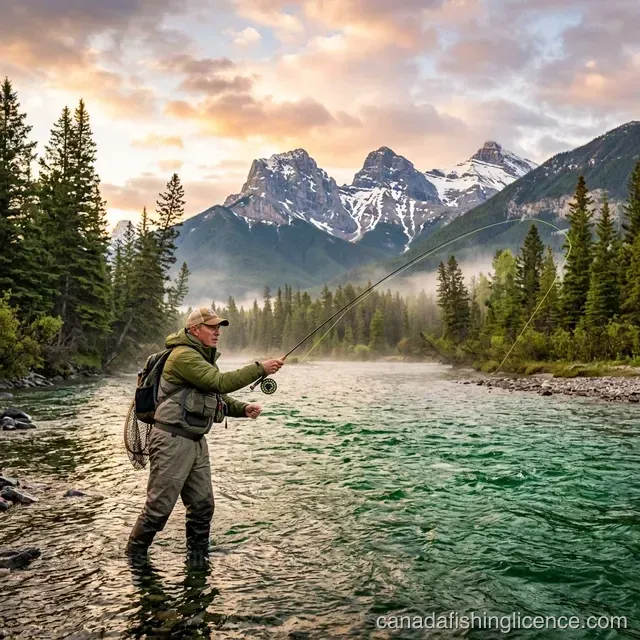
Choose The Right Banff Next Step
For a general Banff fishing plan, choose the water before the checkout path. Bow River, Lake Minnewanka, Two Jack, Vermilion Lakes, and smaller park waters can lead to different season and retention answers.
If you only need daily or annual permit prices, check the Parks Canada permit guide. For Bow River, Lake Minnewanka, gear, retention, or mixed Banff and Alberta-water trips, continue with the water notes below.
For a shorter first-visit version, see the Banff city page. For a Rockies trip across Banff, Jasper, Yoho, or Kootenay, compare the national parks fishing guide before buying permits day by day.
A normal Alberta fishing licence is not the main answer for Banff park waters. Keep it in the plan only if the same trip also includes Alberta lakes or rivers outside the park boundary.
Banff Fishing Guides Can Mean Two Different Things
A Banff fishing guide can mean two different things. Some people want the permit, seasons, and rules so they can plan their own day. Others are looking for a paid guided trip or local outfitter.
For a self-planned day, the important checks are the Parks Canada permit, the main waters, and the rules that change what you can bring or keep. For a paid guide or charter, still check the permit and park rules first, then compare operators separately.
The permit decision does not disappear just because a trip is guided. Banff is still a national park, and the park rules stay with the water you fish.
Banff Season Dates That Matter
Banff does not use one season date for every waterbody. The park publishes different openings for Bow River, the main lakes, and other waters that have shorter summer windows.
| Water | 2026 Timing | Planning Note |
|---|---|---|
| Bow River | Open year-round | No ice fishing |
| Most lakes | May 16 to September 7, 2026 | This is the main Banff lake season for most visitors |
| Other waters except closed waters and listed river sections | July 1 to November 1, 2026 | Useful if your trip is built around smaller waters outside the core lake window |
| Specified river sections | July 1 to August 31, 2026 | Shorter season than the lakes and Bow River |
This is why Banff planning works better when you pick the water first. A trip that looks fine on the calendar can still miss the open season for the exact river, creek, or lake you had in mind.
The Main Waters Most Visitors Actually Plan Around
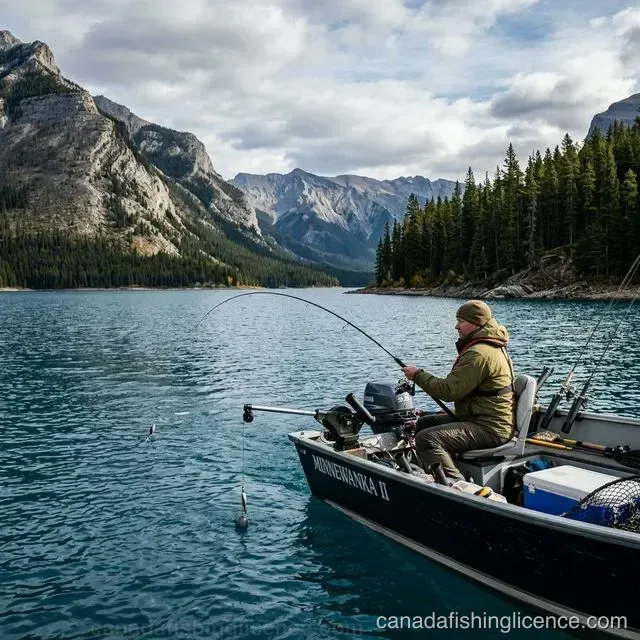
Bow River: the simplest Banff river option to understand because it stays open year-round. It is the right starting point if you want moving water and a plan that is less tied to the short tributary windows.
Lake Minnewanka: the key Banff lake for anglers who may want to keep fish. Banff lists Lake Minnewanka Reservoir as the water where lake trout retention is allowed, with a daily and possession limit of two lake trout.
Two Jack Lake and Two Jack Reservoir: close to town, easier to build into a shorter visit, and useful for anglers who want a smaller-water option instead of committing to Minnewanka.
Vermilion Lakes: one of the more approachable near-town stops when you want a short session without a longer mountain-lake run.
If the plan starts with a general Banff fishing day rather than a specific named water, these are the practical first stops to compare before you look deeper into smaller creeks or the Lake Louise corridor.
Retention Changes The Choice Of Water
Banff is not a park where you should assume normal provincial-style harvest limits. The park says the catch and possession limits for all species are 0 except lake trout at Lake Minnewanka Reservoir.
That single exception matters. If your Banff plan is really a sightseeing trip with one fishing session, Lake Minnewanka is the obvious water to study first when keeping fish matters. If you are fishing elsewhere in the park, go in expecting a stricter release-first setup.
This is also why families and first-time visitors often do better when they choose the water based on the kind of day they want: river day, near-town lake day, or Minnewanka day.
Banff Rules To Check Before Packing
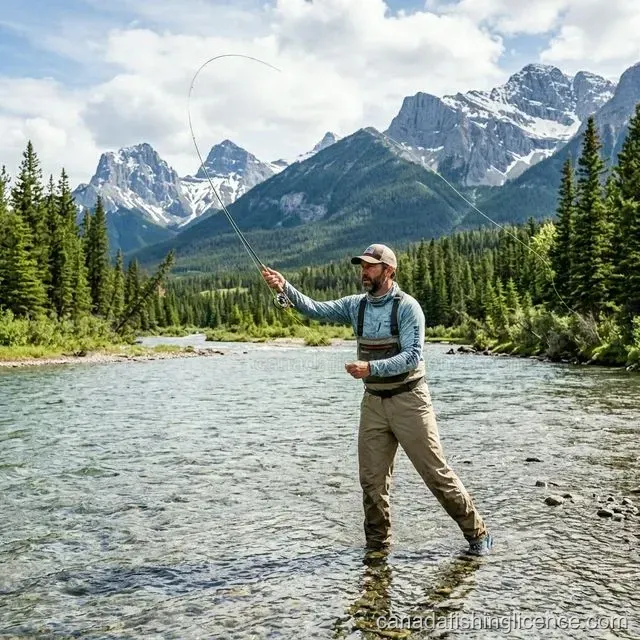
Banff publishes several rules that change what you should bring to the water.
| Rule | What It Means For The Trip |
|---|---|
| One line with one artificial fly per line | Keep your Banff setup simple and read the hook and fly rules carefully before you fish |
| No more than two gang hooks or one single hook attached to a line | Check factory hardware before you arrive |
| Natural bait, chemical attractants, and lead tackle under 50 grams are prohibited in or within 100 metres of park waters | Do not pack worms, scented bait, attractant bottles, or light lead tackle as part of the Banff setup |
| Some waters have separate footgear, watercraft, or whirling-disease precautions | Re-check the current Banff page before you launch, wade, or move gear between waters |
The simplest Banff packing rule is this: bring a lighter, cleaner kit than you would for a normal provincial day trip and confirm the current water-access restrictions before you leave town.
How To Build A Better Banff Fishing Day
If you only have a few hours: stay close to town and pick a near-town water such as the Bow River or Vermilion Lakes so you are not burning the day on driving and re-planning.
If the trip is built around keeping fish: start with Lake Minnewanka and confirm the current Minnewanka rules before you commit the day to it.
If the trip is mainly a national park holiday: keep the fishing plan simple, buy the permit ahead of time, and avoid building the whole day around a tributary that has a short seasonal window.
If Banff is one stop on a longer Rockies road trip: compare the Rocky Mountain annual permit against the number of fishing days you will spend across Banff, Jasper, Yoho, and Kootenay.
Banff City Summary Or Detailed Guide
The Banff city page gives the short version: which permit you need, the easiest waters to compare, and the broad season shape for a first trip.
The detailed Banff guide is for day planning, water-specific notes, and retention limits that can change where you actually fish. The national parks fishing guide helps when the trip also includes Jasper, Yoho, Kootenay, or another park.