- Check whether the licence is still current.
- Check whether the proof is missing or the product actually expired.
- Return to the same official system only after the province, water type, and card or account requirement are clear.
Renewal Starts With Expiry, Proof and Portal Access
A fishing licence renewal in Canada is usually three checks, not one: confirm the expiry date, confirm the proof you can carry, then return to the same issuing portal or account that sold the licence. Western provinces such as B.C., Alberta, Saskatchewan, and Manitoba often use spring licence-year changes. Ontario generally runs fishing products on the calendar year, while Quebec uses an April 1 to March 31 licence year.
If the licence has expired, buy the next valid product before fishing again. If the licence is still active but the PDF, summary, card, or app proof is missing, follow the proof-recovery path before buying a duplicate product.
Renew, replace, or buy again: Renew when the old product is expiring or the new season is open. Replace or reprint when an active licence exists but the proof is missing. Buy again when the licence expired, the province changed, or the trip uses a different water type, species stamp, or park permit.
For renewal, next-season purchase, prerequisite card renewal, or choosing the next valid product before fishing again, focus on the date and issuing system first. If someone already fished during the expiry gap, the no-licence fine guide is the better next step.
| Renewal question | What to check first | What to check next |
|---|---|---|
| Is my licence still current? | Check expiry date, licence year, name, province, water type, and any required stamp or card. | Licence validity guide |
| I need to renew or buy the next product | Return to the same issuing portal after the province, water type, and prerequisite card are clear. | Official portal links |
| I paid, but cannot find the licence proof | Look for active licences, order history, licence summary, app storage, or reprint options before paying again. | Lost licence proof guide |
| The portal, login, card, FWID, WiN, or PDF access is stuck | Treat it as an account or portal problem and avoid repeated duplicate purchases. | Website troubleshooting guide |
| The old licence expired and I already fished | Stop fishing first, then separate expired, missing proof, wrong water, and no-licence risk. | No-licence fine guide |
Fishing Licence Renewal Starts With The Issuing Account
In Canada, the official spelling on many pages is fishing licence, while many anglers type fishing license renewal. The renewal path is the same: return to the issuing province, territory, or federal tidal-water account where the licence was bought.
If the old licence already expired, do not keep fishing while you renew. Buy the next valid product first, then save or print the proof before returning to the water.
If you are not sure whether the licence expired, check the licence validity guide. If you already know it is expired and want to understand the penalty risk, read the no-licence fine guide and then use the fine calculator after you stop fishing.
Ontario Renewal: Card And Licence
For Ontario renewal questions, check two things, not one: the Outdoors Card and the fishing licence product.
The Outdoors Card is valid for 3 calendar years. If it has expired, renew the card before relying on any longer Sport or Conservation fishing product. The 1-day Sport licence is the main Ontario fishing exception that does not require an Outdoors Card.
Start with the Ontario Outdoors Card renewal guide for the card path, check the Ontario cost guide for current prices, and open official portal links when you are ready for Hunt & Fish Ontario.
The March 31st Trap: Read This Before Buying Late-Season
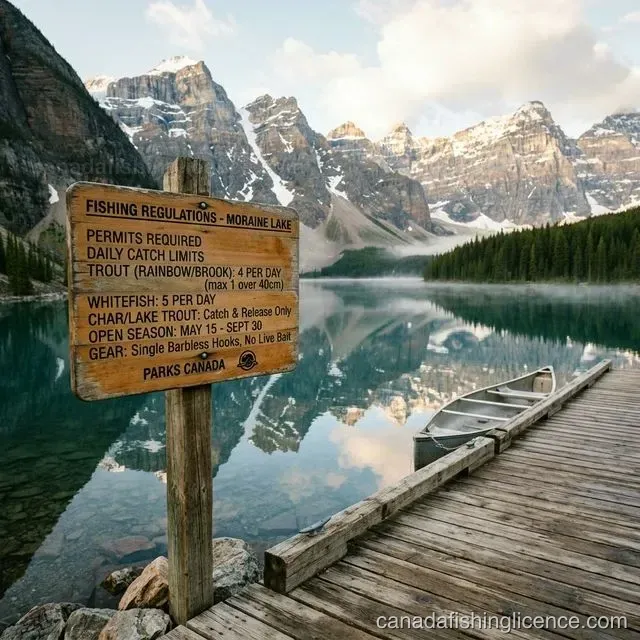
This catches more anglers than any other licensing mistake in Canada. In BC, Alberta, and Saskatchewan, most annual licences expire on March 31. Manitoba is different: its annual angling licence runs from May 1 to April 30. A late-season purchase can still leave you with only a short window before the licence year turns over.
Conservation officers can treat an expired licence the same as fishing without a licence. Fines and gear consequences depend on the province and offence. Do not rely on a grace period unless the current local rules clearly provide one.
What to do: If you're buying late in a fixed licence year, compare the annual price to a short-term licence where the province offers one. In Alberta, a non-resident 7-day licence can make more sense than the annual if you're only getting a short window of use. Ontario runs annual fishing products on the calendar year and also offers 3-year products for some anglers. Check the licence validity guide if you're unsure.
How to Renew — Province by Province
Log into the same issuing portal you used before. If you need the link again, start with the official portal links. Your account saves your info, so the renewal is faster than the first purchase:
Ontario: huntandfishontario.com — Check whether your Outdoors Card is still active, then purchase a new Sport or Conservation fishing tag. Ontario also offers 3-year licences if you prefer less frequent renewals. BC: Starting April 1, 2026, start from the official BC WILD login page for freshwater licences. Set up or confirm your Fish and Wildlife ID (FWID) before buying through WILD; old Angler Numbers are not FWIDs.
Alberta: albertarelm.com — Your WiN must be active before you can buy most fishing products. Saskatchewan: start from the official angling licence page and check whether the Fisheries Habitat Certificate applies to your product. Residents 65+ are exempt from the certificate.
Manitoba: manitobael.ca. Quebec: Quebec licences run April 1 to March 31, and My Hunting and Fishing Account is the official purchase path. Atlantic provinces: Nova Scotia, New Brunswick, PEI, Newfoundland & Labrador — each has its own portal. Start from the official province page when you need the current government checkout.
What Changed for 2026–2027
BC — WILD System (April 1, 2026): The old E-Licensing portal is gone for new freshwater purchases. Register for a free FWID through the official BC WILD login page using Basic BCeID or an eligible BC Services Card Account. If the product you need is not available online, check that the trip is freshwater rather than tidal, then use FrontCounter BC, Service BC, or a participating vendor if you still need help buying.
Saskatchewan — Fisheries Habitat Certificate (April 1, 2026): New mandatory requirement on top of your fishing licence. $21 for annual licence holders, $5.25 for short-term. Residents 65+ are exempt from the certificate. If you hold both hunting and angling licences, you only need one certificate.
DFO Tidal Prices (2026–2027): Updated prices for BC tidal licences — Resident annual $25.86, Non-resident $124.41, Salmon Conservation Stamp $7.39. These take effect April 1, 2026. Note: tidal and freshwater salmon add-ons are separate and not interchangeable.
Don't Forget Your Prerequisite Cards
Three provinces require a separate ID or account step before you can buy a fishing licence. These are easy to overlook when renewing:
Ontario Outdoors Card: Valid for 3 calendar years. If it expired, you need to buy a new one before most seasonal fishing licences. The online portal will prompt you. Not required for 1-day licences. Alberta WiN: Activate or update the WiN before buying most Alberta fishing products. Saskatchewan HAL ID: Permanent and free. No renewal needed.
If your prerequisite card has expired and you try to buy a fishing licence online, the portal will prompt you to renew it first. Best to check a week before opening day rather than scrambling at the boat ramp.
Seniors, Veterans, and Other Exemptions
Before renewing, check if you've become eligible for an exemption or reduced rate since your last licence:
Seniors (65+): Ontario — completely free (Canadian residents 65+ need no Outdoors Card or licence, just government ID). Alberta — Alberta residents 65+ get a free sportfishing licence. Saskatchewan — residents 65+ exempt from both licence and the new Fisheries Habitat Certificate. Many other provinces offer reduced senior rates.
Veterans and active military: In Ontario, eligible Ontario residents can use listed Canadian Armed Forces or veteran documents as their deemed fishing licence. In Alberta, eligible resident Canadian Armed Forces veterans can get the free CAF Veteran Sportfishing Licence through WiN and AlbertaRELM. Check your province for similar programs. Age exemptions: If you have children who've turned 16 (or 18 in Ontario/Quebec), they now need their own licence.
Lost Your Licence? Here's What to Do
Log into the same portal where you bought it and reprint or re-download the PDF. Most provinces let you do this for free. Your licence is tied to your account, not to the piece of paper. Check the lost licence guide for province-specific steps.
For in-person replacements at government offices, some provinces charge a small fee ($5–$10). Most Conservation Officers accept digital copies on your phone — showing the PDF with your name, licence number, and valid dates is fine. But always keep a printed backup in a ziplock bag in your tackle box for areas with no cell service.
Triple backup strategy: Save the PDF to your phone, email it to yourself, and print a copy for your tackle box. Much of Canada's best fishing is in remote areas where your phone won't have service.
Recently Moved Provinces? Update Your Residency
If you've moved to a new province, update your licensing profile before purchasing. Resident licences can be much cheaper than visitor products. In Ontario, the 2026 1-year Sport licence is $26.57 for Ontario residents and $83.19 for non-Canadian residents before tax. In B.C., the 2026-27 annual freshwater basic licence is $41.15 for residents and $91.44 for non-Canadians before tax.
Most provinces consider you a resident after 6–12 months of living there. Proof includes your provincial driver's licence, health card, or a utility bill. Contact the new province's Fish and Wildlife department if you're unsure whether you qualify yet.
Important: your old province's licence is not valid in your new province. Even if it hasn't expired yet, you need to buy a new one for the province where you're actually fishing. Check the cost-by-province comparison before you buy.
Set a Reminder — The #1 Reason Anglers Get Fined
The most common fishing violation in Canada isn't poaching or exceeding limits — it's fishing with an expired licence because you forgot to renew. Set a calendar reminder 2 weeks before your expiry date.
If you're in a March 31 province and fish year-round (including ice fishing), set your reminder for mid-March. New-season licences are usually available for purchase 1–2 months before the season starts. You can also set the date with the licence renewal reminder. Conservation Officers check licences year-round — not just in summer. For more details on what happens during a check, see the CO encounter guide.