| Validity check | What to confirm |
|---|---|
| Date | The licence year or printed expiry date has not passed. |
| Identity | The licence is in your own name and matches the ID you carry. |
| Water | The province, freshwater/tidal split, national park boundary, and species match the trip. |
| Add-ons | Cards, stamps, salmon products, classified waters, tags, or retention records are current when required. |
| Proof | You can show the accepted proof format offline if service is weak. |
Is My Fishing Licence Valid?
To check if your fishing licence is still valid, confirm the expiry date, the name on the licence, the province or water type, and any required card, stamp, tag, salmon product, tidal licence, or park permit. If one of those pieces is wrong, the licence may not be ready for the trip.
The fastest check is the issuing account or portal where you bought the licence. Look for the active licence, expiry date, prerequisite card, and any required stamps or tags. If you only have a paper copy, read the printed expiry date and make sure the name matches your ID.
The detail that catches many anglers is timing: an annual licence often follows the province's licence year, not 12 months from the day you buy it. Ontario annual products generally end on December 31. Many other provinces run April 1 to March 31, while Manitoba's 2026-27 annual angling licence runs May 1, 2026 to April 30, 2027. A licence bought late in the season may expire sooner than expected.
If your licence is expired: stop fishing before you fix it. An expired licence is usually handled like fishing without a licence, and the safer path is to renew or buy the correct licence before you cast again.
BC note for 2026: As of April 1, 2026, BC freshwater licences are issued through the WILD system. For many freshwater products, your Fish and Wildlife ID (FWID) number plus personal identification is part of the proof check. Conservation Surcharge Stamps, classified waters, white sturgeon, and retention records can add separate carry or recording requirements, so check the product shown in WILD before leaving home.
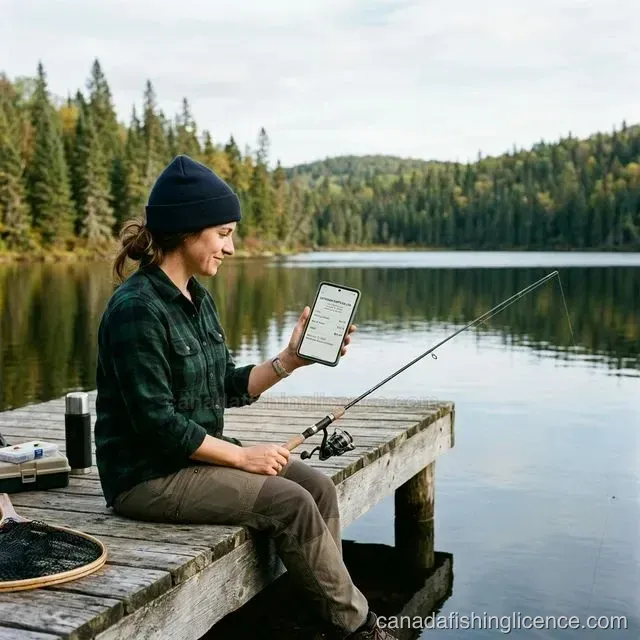
If It Is Not Valid, Choose the Right Next Step
If the account shows an expired licence, inactive prerequisite card, wrong province, missing salmon stamp, or wrong water type, treat that as a stop sign before you fish. The fix is usually simple, but it needs to happen before the next cast.
Check the licence, card, stamp, province, water type, name, expiry date, and proof format before fishing. The no-licence fine guide is a better next step only after the trip already happened or the problem has become a penalty-risk question.
Renewal path: If the licence or prerequisite card expired, go to the fishing licence renewal guide. Ontario anglers should check both the Outdoors Card and the fishing tag; Quebec anglers should check the April 1 to March 31 licence year and any zone or salmon product tied to the trip.
Replacement path: If the licence is still active but the proof is missing, re-download or reprint it from the issuing portal. The lost licence guide is the better next step when you bought the right product but cannot show it.
Fine-risk path: If you already fished while expired, in the wrong province, or without a required product, read the fine for fishing without a licence guide first, then check the fine calculator for a practical province estimate.
Common Licence-Year Patterns by Province
A licence year is easy to misunderstand. Annual products often follow a government licence year instead of lasting 12 months from purchase. Treat the printed expiry date or account status as the final answer.
Ontario — January 1 to December 31 for annual fishing products: Ontario also offers 3-year fishing products that expire on December 31 of the final year. Check both the Outdoors Card and the fishing tag; the card and tag are separate pieces of the licence setup.
British Columbia — April 1 to March 31: BC runs on the provincial fiscal year. A licence bought in February expires March 31 — less than 8 weeks later. 2026 change: Starting April 1, 2026, freshwater licences are issued through the WILD system. You need a free, permanent Fish and Wildlife ID (FWID) before buying a freshwater licence. Old Angler Numbers retire after the previous licence year and are not treated as FWIDs. Use Basic BCeID or an eligible BC Services Card Account for the online path.
Alberta — April 1 to March 31: Alberta sportfishing licences generally follow the April-to-March licence year. You need a WiN before purchasing most licences. Purchase and account details are available through MyWildAlberta and AlbertaRELM.
Quebec — April 1 to March 31. Purchase at quebec.ca or at authorized vendors. Zone-specific regulations may further restrict your valid fishing dates.
Saskatchewan — April 1 to March 31. Check the official angling licence page for your Saskatchewan account and current product rules.
Manitoba — May 1 to April 30. Annual angling licences for the 2026-27 cycle are valid from May 1, 2026 to April 30, 2027 and are available through Manitoba eLicensing.
Atlantic provinces and territories: Licence years and products vary by province or territory. New Brunswick uses the NB Outdoors Card setup, Nova Scotia and Newfoundland sell provincial products through their own systems, PEI has vendor and online paths, and northern trips may involve lodge or special-area handling. Confirm the printed expiry date before buying a duplicate.
Short-term decision: If you are near the end of a licence year, compare a short-term product with the annual product before paying. The annual product may still be useful if you will fish into the next part of the licence year; otherwise, a one-day or short-term product may fit better.
Where to Check or Recover Licence Proof
Bookmark the issuing portal for the licence you bought. Some systems show a live account status, while others are mainly purchase, reprint, vendor, or office-contact paths. The printed expiry date on your licence or licence summary still matters.
| Area | Status or proof path | What to check |
|---|---|---|
| Ontario | Hunt and Fish Ontario account | Outdoors Card, fishing tag, name, and expiry dates. |
| British Columbia freshwater | BC WILD account | FWID, freshwater licence, surcharge stamps, classified waters, and retention records. |
| BC tidal and other DFO tidal waters | DFO NRLS account | Tidal licence, salmon stamp, and printed or saved proof. |
| Alberta | MyWildAlberta or AlbertaRELM | WiN, sportfishing licence, licence year, and purchase proof. |
| Saskatchewan | Saskatchewan angling licence page or HAL account | Active licence, habitat certificate needs, and printed or saved proof. |
| Manitoba | Manitoba eLicensing or vendor path | May-to-April licence year, licence class, and copy of the licence. |
| Quebec | My Hunting and Fishing Account or authorised seller | Licence family, zone or salmon product, and April-to-March dates. |
| Atlantic provinces | Provincial e-licensing, natural resources page, vendor, or issuing office | Province licence, salmon or tidal add-on, paper proof, and local season dates. |
| Territories | Yukon, NWT, or Nunavut official licence path | Visitor class, lodge handling, park boundary, and any salmon or special-area document. |
Ontario: huntandfishontario.com → Log in → "My Licences." Your Outdoors Card validity, all fishing tags (Sport or Conservation), and exact expiry dates are shown. You can see if your Outdoors Card renewal window is open (first Tuesday of December annually).
British Columbia: Freshwater licensing moved to the official BC WILD login page on April 1, 2026. Tidal and saltwater licences stay in the separate DFO National Recreational Licensing System (NRLS).
Alberta: Start from MyWildAlberta or AlbertaRELM and check your active licences plus WiN status.
Saskatchewan: Check the official Saskatchewan angling licence page or HAL account. Current licences and draw results are shown after login.
Manitoba: gov.mb.ca/fish-wildlife or authorized vendors. Online purchase portal available.
Quebec: My Hunting and Fishing Account — licence management including salmon stamps.
New Brunswick: gnb.ca — requires NB Outdoors Card (free) first.
Nova Scotia, Newfoundland and Labrador, PEI: Check the current provincial natural resources, wildlife, or e-licensing page. If an online account is not available for your product, contact the issuing office or vendor with the details printed on the licence.
Yukon, Northwest Territories, Nunavut: Check the official territorial licence page, lodge instructions, or issuing office. Visitor licences, park waters, and special-area rules can change the proof you need.
Federal (DFO Tidal Waters): If you have a Pacific or Atlantic tidal (saltwater) waters licence, check at the DFO NRLS portal. This is separate from your provincial freshwater licence.
7 Signs Your Licence Might Be Invalid Right Now
1. Wrong province: A BC licence does not work in Alberta. Each province requires its own licence. Border rivers can be tricky — on the Ottawa River, the bank you're standing on determines which province's licence you need. On shared waterbodies like Lake of the Woods, check which provincial boundary you're in.
2. Wrong water type (BC-specific): In BC, a freshwater licence does not cover tidal (saltwater) waters, and vice versa. These are entirely separate licensing systems — freshwater is provincial (WILD system), tidal is federal (DFO NRLS). Make sure you have both if you're fishing estuaries where fresh and salt water mix.
3. Missing stamps or tags: Your base fishing licence may not cover everything. BC salmon retention can require a provincial non-tidal salmon surcharge in freshwater or the federal Salmon Conservation Stamp ($7.39) in tidal water, and steelhead waters can require a Steelhead Conservation Surcharge Stamp. Ontario's Sport vs Conservation tag determines your daily limits. National Parks use separate Parks Canada permits for park waters.
4. Outdoors Card expired (Ontario-specific): In Ontario, the Outdoors Card is separate from the fishing tag. Your account or licence summary should show both dates. If the card is expired or the tag is not active, treat the setup as not ready until both pieces are current.
5. WiN Card inactive (Alberta-specific): Alberta requires an active WiN Card before most licence purchases. If your WiN is not active in AlbertaRELM, your licence purchase may not have gone through properly.
6. Old BC Angler Number (2026-specific): If you are buying a 2026-27 BC freshwater licence, set up or confirm your FWID in WILD first. Old Angler Numbers retire after the previous licence year and are not treated as FWIDs.
7. Wrong person: A fishing licence is personal. Do not rely on a spouse's, parent's, or friend's licence unless an official exemption clearly applies to the angler. Each person fishing should have their own valid licence or exemption, and the name on the licence should match the person holding the rod.
Fine Risk If You Fish After a Licence Expires
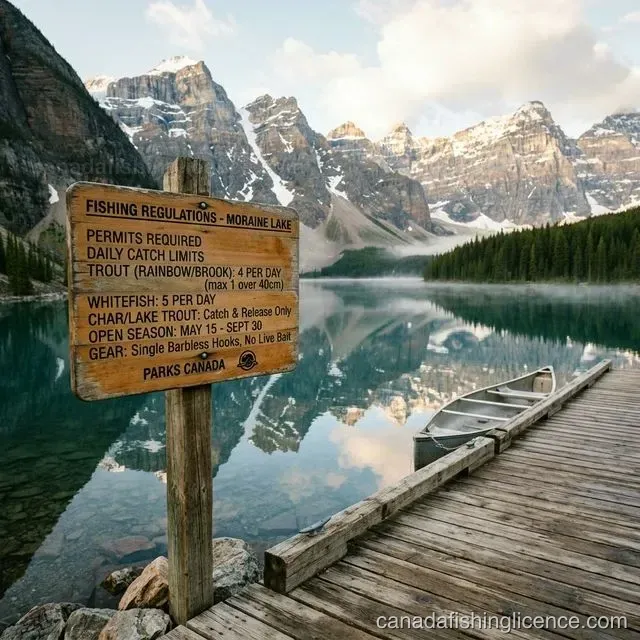
Once a licence, card, stamp, or required permit has expired, the trip can become a no-licence or wrong-licence problem. The dollar amount depends on the province, the water type, the ticket wording, and whether there are extra issues such as a closed season, over-limit catch, too many lines, or missing salmon documentation.
Ontario: Ontario ticket wording and total payable amounts can include a set fine, costs, and surcharge. Court-level penalties under the Fish and Wildlife Conservation Act can be much higher than an ordinary ticket, especially when other offences are involved.
British Columbia: BC freshwater and federal tidal waters are separate systems. Freshwater violations are handled under provincial rules, while tidal licensing issues can involve federal fisheries enforcement. Check whether the water was freshwater, tidal, or a boundary area before comparing penalties.
Alberta: Alberta sportfishing licence and WiN requirements are separate checks. A missing or inactive WiN can create a different problem from an expired sportfishing licence, so compare the ticket wording with your AlbertaRELM or MyWildAlberta account.
Other provinces and territories: Set fines, surcharges, licence suspensions, gear seizure, and catch seizure vary. For a quick planning number, the fine calculator can help, but the ticket or official regulation page is the source that matters for a real incident.
If you notice the problem before an officer check: stop fishing, fix the licence or permit, and keep the renewal or replacement proof. Do not keep casting while trying to sort it out on your phone.
If you already received a ticket: read the instructions on the notice. Deadlines, payment options, and dispute paths are provincial or court-specific, so the notice is more reliable than a general web page.
BC WILD System — The 2026 Transition Explained
This is a major licensing system change for British Columbia freshwater anglers. These practical checks matter before a freshwater trip:
What changed on April 1, 2026: All freshwater fishing licences moved from the old fishing.gov.bc.ca system to BC's new WILD system. Start from the official BC WILD login page for current FWID and freshwater licence access. Tidal and saltwater licences still use the separate federal DFO path.
Step 1 — Get your FWID: Every freshwater angler needs a Fish and Wildlife ID. Use Basic BCeID or an eligible BC Services Card Account for the online path. In-person registration and purchase help is available at FrontCounter BC, Service BC, and participating vendors.
Step 2 — Buy your licence: Log into WILD and purchase your freshwater licence, stamps, and classified waters licences. If a product is not available, confirm the water type, FWID setup, residency category, and licence year before using an in-person purchase path.
What you carry now: FWID plus personal photo ID is part of the freshwater proof check, but product-specific rules still matter. Carry the required copy or record for Conservation Surcharge Stamps, classified waters, white sturgeon, or any licence that needs catch details recorded.
What happens to old licences: Licences purchased through fishing.gov.bc.ca before April 1, 2026 kept their printed expiry date. Annual 2025-26 freshwater licences expired March 31, 2026. Old Angler Numbers retire after that licence year and are not treated as FWIDs.
For the WILD account and FWID steps, see the BC WILD System Guide.
Never Fish Expired Again — Prevention Strategies
Strategy 1 — Calendar reminders: The moment you buy a licence, set a phone reminder for 2 weeks before expiry. Most portals show exact expiry dates — add them to your calendar that same day, or set the date with the licence renewal reminder. Set a second reminder for the day the new season starts (April 1 for most provinces, January 1 for Ontario).
Strategy 2 — Consider multi-year where it is available: Ontario offers 3-year fishing products tied to the calendar year. That can reduce missed renewals for anglers who fish every season, but the account expiry date should still be checked before each trip.
Strategy 3 — Match the province's licence-year habit: If your province runs April 1 to March 31, set your reminder in March. If you fish in Ontario, set it before December 31. Manitoba anglers should watch the May 1 licence-year change.
Strategy 4 — Keep offline proof: After buying online, save the PDF, confirmation, or licence summary where you can reach it without cell service. In BC, still check the WILD product details for stamps, classified waters, white sturgeon, and retention records.
Strategy 5 — Check before every trip: Before loading the car, confirm the account status, expiry date, province, water type, and add-ons. This matters most around March/April, April/May, and December/January licence-year changes.
For renewal steps, go to the licence renewal guide. For first-time setup, province choice, or licence class questions, go to the licence path guide.
Special Situations — When Your Licence Isn't Enough
Even a valid, current licence may not cover all fishing situations. Watch for these:
National Parks: A separate Parks Canada fishing permit is required for park waters. Rocky Mountain parks currently list a $15.00 daily permit and a $51.25 annual permit, and other parks should be checked on their own official page before you buy.
Atlantic salmon (Quebec, NB, NL, NS): Most provinces require a separate salmon licence or stamp on top of the base fishing licence. Quebec non-resident annual Atlantic salmon licence: $191.72. New Brunswick Class I salmon: $173/season (non-resident). Plus NB requires non-residents to hire a licensed guide for salmon.
BC conservation add-ons: Salmon, steelhead, classified waters, and white sturgeon requirements can sit beside the basic freshwater licence. The WILD product page and the freshwater synopsis tell you what proof or record has to be carried.
Crossing provincial borders: If you fish a river that crosses provincial lines, check which province controls the bank, water, or boundary area where you are fishing. Some boundary waters have special rules, so do not assume one province's licence travels with you.
Tidal vs. freshwater in BC: BC freshwater licensing and DFO tidal licensing are separate. If a trip touches both systems, check the tidal boundary and carry the licence for the water you will actually fish.