When You Need a Salmon Stamp or Special Licence
In BC, the salmon add-on depends on the water type. Freshwater salmon can require the non-tidal Salmon Conservation Surcharge, while tidal salmon retention uses the federal Salmon Conservation Stamp. The two systems are separate, and the add-ons are not interchangeable.
In Quebec, you need a separate Atlantic salmon licence. In New Brunswick, salmon is covered through Class I licensing. In Ontario, there is no separate salmon stamp, but your Sport or Conservation licence type and the local zone rules still control what you can keep.
Start with the province and water type first. Salmon rules change by freshwater vs tidal water, species, river, and season, so the right answer is rarely just "buy a regular fishing licence."
For Yukon trips, check the visitor guide when the plan depends on a Salmon Conservation Catch Card, Alaska-resident pricing, a short-trip licence, or park-water rules before checkout. The Salmon Conservation Catch Card applies when fishing for salmon, but the Yukon licence class and park-water question still need their own checks.
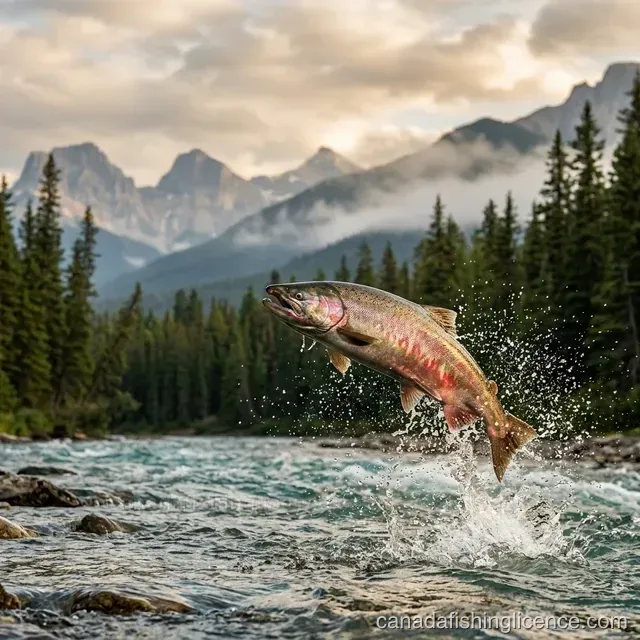
Why Salmon Require Special Licences
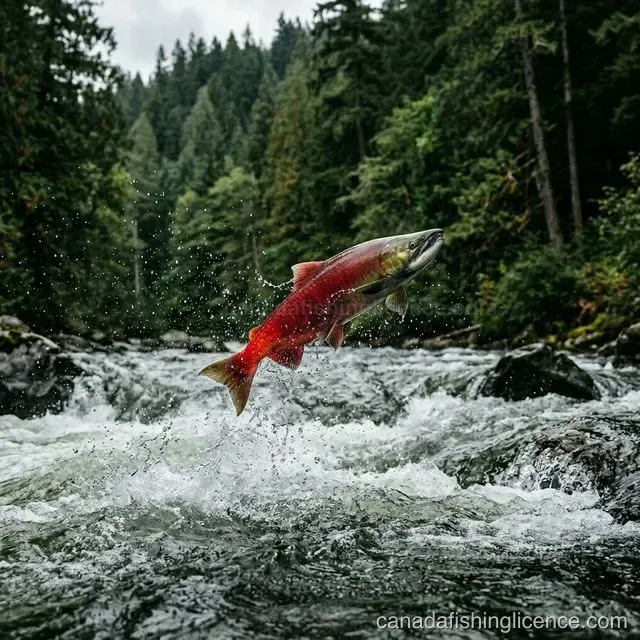
Salmon are among Canada's most carefully managed sport fish. Many Pacific and Atlantic salmon populations face pressure from warmer water, habitat change, mixed-stock fishing, migration barriers, and river-specific conservation concerns.
Canada hosts five species of Pacific salmon (Chinook/King, Sockeye/Red, Coho/Silver, Pink/Humpy, Chum/Dog) primarily in British Columbia, and Atlantic salmon (Salmo salar) in Quebec, New Brunswick, Nova Scotia, and Newfoundland & Labrador. Each species and region has different licensing requirements, seasons, and catch limits. For help telling them apart, see the How to Identify Pacific Salmon Species guide.
Revenue from salmon stamps, conservation surcharges, and special licences supports conservation work such as habitat restoration, population surveys, and enforcement. In BC, salmon add-ons are part of a wider management system rather than one interchangeable stamp for every water type.
The Paper Recording Rule
Many anglers now carry licences on a phone, but salmon retention can still require a paper record.
In British Columbia and several Atlantic salmon systems, if you catch and decide to retain a salmon, the catch may need to be recorded immediately on the licence or tag record in the format required by that system. Do not assume you can wait until you get back to the dock.
If you buy a salmon add-on online, check whether the proof must be printed before the trip. Carry a waterproof pen and keep the paper proof dry enough to write on if you may retain fish.
Practical habit: Ask the outfitter, charter operator, or official licence issuer what record you need to carry before you leave shore. That small check prevents a phone-only setup from becoming a problem after a legal catch.
British Columbia — Freshwater Salmon
BC has a layered salmon licensing system. For freshwater salmon fishing, you need a BC Freshwater Fishing Licence ($41.15 for residents, $91.44 for non-Canadian non-residents, 2026–2027 season) plus the non-tidal Salmon Conservation Surcharge if you want to keep salmon where retention is open. The current BC fee table lists the salmon surcharge at $17.14 or $34.29 depending on residency category. Without the relevant add-on, treat the fish as release-only and still check whether that water is open to salmon fishing.
Starting April 1, 2026, freshwater licences are purchased through BC's new WILD system. Register for a free Fish and Wildlife ID (FWID) through the official BC WILD login page and purchase your licence and add-ons online. The non-tidal Salmon Conservation Surcharge is a separate add-on during the licence purchase process — don't forget to add it if you plan to keep fish. For a step-by-step walkthrough of the new system, see the BC WILD System Guide.
Classified Waters: Many of BC's well-known salmon and steelhead rivers — Skeena tributaries, Dean River, Thompson River, Bella Coola — are designated "Classified Waters." These require an additional Classified Waters Licence on top of the basic freshwater licence. Non-residents must purchase daily access specific to a particular river and date. This system manages fishing pressure on busy waters, so check availability early if you are targeting a named river.
Barbless hooks: Single barbless hook requirements vary by water, fishery, and notice. Check the provincial classified-water rules and the relevant DFO notice before each trip instead of relying on a broad salmon rule.
British Columbia — Tidal (Saltwater) Salmon
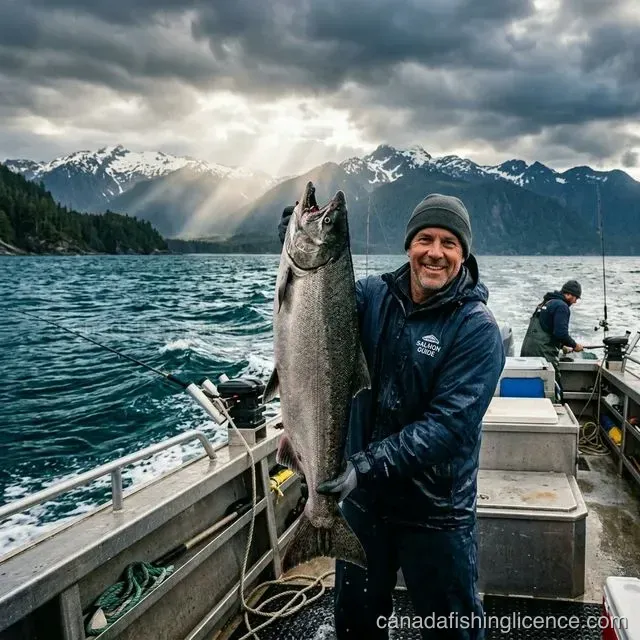
For ocean (tidal) salmon fishing in BC, you need a separate federal DFO Tidal Waters Sport Fishing Licence. 2026–2027 annual prices: $25.86 for residents, $124.41 for non-residents (excluding GST). Short-term options: 5-day ($19.70 resident / $38.18 NR), 3-day ($13.54 / $23.40), 1-day ($6.46 / $8.62). See the BC Tidal Fishing Licence page for the complete price table.
A Salmon Conservation Stamp ($7.39) is also required on the tidal licence if you want to keep salmon from the ocean. Important: the tidal stamp and the freshwater non-tidal salmon surcharge are separate products, so they are not interchangeable.
The two-system split: BC rivers and lakes use the provincial freshwater path, while BC tidal waters use the federal DFO path. If you plan to fish a river and the ocean on the same trip, check both systems and buy the relevant base licence and salmon add-on for each water type. They do not cross over.
Tidal licences are purchased through the federal DFO NRLS portal.
2026 Chinook Checks Before a B.C. Trip
This section matters for anyone planning a 2026 B.C. salmon trip. DFO manages Chinook with annual plans and in-season fishery notices because rules can change by stock, area, and conservation objective.
The practical issue for anglers is that Chinook opportunity can change by management area, date, stock, mark status, and retention rule. Some waters may allow retention, some may be non-retention, and some may be closed to targeting. The coastwide annual limit for Chinook from all tidal waters is still a separate check from any daily area limit.
For summer and fall 2026, treat the DFO Pacific Regional Fishery Notices page as the working rule before you travel. A lodge page, printed plan, or early-season summary is not enough for a Chinook trip if the area notice has changed since you booked.
If you have already booked a trip, ask the operator which DFO area notice applies to the exact water and whether the trip is retention, non-retention, or catch-and-release only. That question is more useful than asking only whether "salmon season" is open.
Quebec — Atlantic Salmon
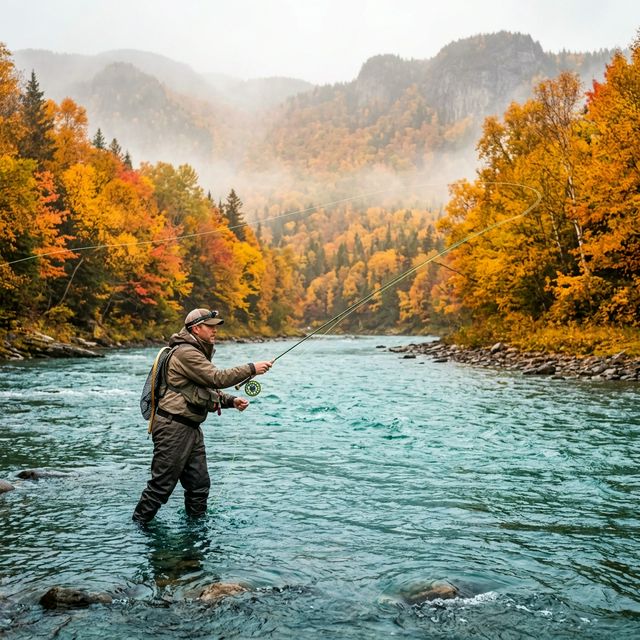
Quebec has several highly regarded Atlantic salmon rivers, and the licensing reflects that managed fishery. Beyond the general Quebec fishing licence ($26.73 resident / $95.68 non-resident), salmon fishing requires a separate Atlantic salmon licence with specific pricing:
Annual Atlantic Salmon Licence (with 4 tags): $59.76 resident / $191.72 non-resident. 3-Day Licence: $26.04 resident / $51.08 non-resident. Mandatory Release (catch-and-release only) Licence: $26.04 resident / $51.08 non-resident. All prices include taxes and a contribution to the Fondation de la Faune du Québec. Licences are valid April 1 to March 31.
Many of Quebec's well-known salmon rivers are managed through ZECs (Zones d'exploitation contrôlée) or outfitter-controlled access. You may need to reserve daily rod access (droits de pêche) before the trip, and daily access fees can apply on top of the provincial licences. Fly-fishing rules and river access conditions should be checked for the exact river.
Quebec uses a catch tagging system when salmon retention is allowed. You receive numbered tags with the salmon licence and must follow the river rule for tagging, registration, grilse, large salmon, and mandatory-release periods. The broad season window is not enough by itself because individual rivers can carry their own dates and restrictions.
Catch-and-release limits, registration requirements, and daily fishing hours can vary by river and season period. Check the current Quebec salmon page and the river manager before treating a salmon trip as open.
Ontario — Great Lakes Salmon
Ontario is simpler on the stamp question: no separate salmon stamp is sold for ordinary Great Lakes salmon fishing. But your licence type matters because Sport and Conservation licences carry different catch and possession limits. Check the salmon and trout aggregate limit for the exact Fisheries Management Zone and waterbody exception before keeping fish.
Ontario manages introduced Pacific salmon such as Chinook and Coho in parts of the Great Lakes system. Tributaries such as the Credit River, Ganaraska, Salmon River, and Saugeen draw fall salmon anglers, while Lake Ontario charter boats often target Chinook and Coho in summer when conditions are suitable.
Ontario is also running Atlantic salmon restoration programs in Lake Ontario tributaries through the Bring Back the Salmon initiative. If you think you caught an Atlantic salmon in Ontario, check the current Ontario rule before keeping it and release it if the species or rule is uncertain.
The 2026 Ontario Fishing Regulations Summary is the official source for zone-specific rules, including waterbody exceptions, open seasons, and tributary timing.
Atlantic Provinces — Atlantic Salmon Rules
New Brunswick: Requires a separate Class I (salmon and trout) licence. Non-resident season salmon licence: $173.00 (includes fish stocking and conservation fees, excludes tax). Shorter options: 7-day $100.00, 3-day $53.00. A free New Brunswick Outdoors Card is required before purchasing any licence. Fly fishing only is mandatory on most salmon rivers. The Miramichi and Restigouche systems are well-known Atlantic salmon waters. All catches must be reported.
Nova Scotia: Atlantic salmon in fresh water uses a separate Salmon Fishing Licence, and the salmon licence is not valid for other species. Start with the Nova Scotia Atlantic salmon licence guide for fees, report-card timing, and licence dates, then check the current handbook and river-level rules before planning retention or catch-and-release details.
Newfoundland & Labrador: Scheduled salmon rivers have a separate salmon licence path, river-class checks, retention rules, and reporting duties. Check the current Anglers Guide before treating a salmon trip as open for retention.
In-Season Closures — The 24-Hour Notice Reality
The 24-hour notice reality: Salmon seasons can be shortened or closed with little warning when fish counts, water temperature, escapement, or conservation concerns change.
For a B.C. salmon trip, check the official DFO Pacific Regional Fishery Notices page shortly before you travel and again before fishing the exact area. Do not rely only on printed regulations from the start of the year or third-party fishing forums.
Barbless hooks and gear rules vary by jurisdiction, water, species, and notice. Check the local salmon rule even if you plan to practise catch-and-release.
Hatchery vs. wild identification: In BC tidal waters, you may need to identify whether a salmon is hatchery-origin (adipose fin clipped) or wild (adipose fin intact). In some areas, only hatchery-marked Chinook may be retained. Check area-specific regulations. Participation in the DFO Salmon Head Recovery Program is encouraged for hatchery-marked Chinook and Coho to assist stock assessment.
Cost Summary for Non-Residents (2026–2027)
Here's what a non-resident salmon trip actually costs in licence fees alone (all prices in CAD, excluding taxes unless noted):
BC Freshwater Salmon: Freshwater Licence ($91.44 for non-Canadian NR) + non-tidal Salmon Conservation Surcharge ($34.29 for non-resident and non-resident alien categories) + Classified Waters daily fee where required = $125.73 before tax and before any classified-water fee. BC Ocean Salmon: Tidal Licence ($124.41 non-resident annual, 2026–2027) + Salmon Conservation Stamp ($7.39) = $131.80 before GST. BC Both Systems: If you want to fish rivers and ocean, budget for both base licences and both salmon add-ons because the freshwater surcharge and tidal stamp do not cross over.
Quebec Atlantic Salmon: General Licence ($95.68 NR) + Annual Salmon Licence ($191.72 NR) + ZEC daily river access ($25–$100+/day) = $287.40 before daily access fees. New Brunswick: Season Salmon Licence = $173.00 (includes conservation fees; free Outdoors Card required first). Ontario: Sport Licence ($83.19 non-Canadian NR) + Outdoors Card ($8.57) = $91.76, no separate salmon stamp needed.
For Quebec trips, check the Quebec visitor guide for the base sport licence, short-term product, zone, ZEC, or buying timing before you treat a salmon trip as only a salmon-licence question.
For a full comparison of non-resident fishing costs across all provinces, see the Cost by Province page. If you're an American planning a cross-border trip, the Canadian Fishing Licence for Americans guide covers the full process.
Salmon Species at a Glance — What You're Likely to Catch
Understanding which species you're targeting matters for licensing — some regulations are species-specific. Here's a quick overview:
Chinook (King) Salmon: The largest Pacific salmon. Found in BC tidal and freshwater, with introduced Great Lakes populations in Ontario. B.C. Chinook rules can include non-retention, mark-selective limits, area closures, and notice changes.
Sockeye (Red) Salmon: Important on the B.C. coast and Fraser system. Fishing opportunity can be restricted or closed depending on run-size forecasts and in-season notices.
Coho (Silver) Salmon: BC tidal and freshwater, Lake Ontario, Lake Huron. Generally more abundant than Chinook. Often subject to hatchery-mark selectivity rules — you may need to release wild (unclipped) Coho while keeping hatchery-clipped fish.
Pink (Humpy) Salmon: Primarily a B.C. Pacific salmon planning question. Runs are strongest in odd years on many mainland systems, while some local even-year runs exist.
Chum (Dog) Salmon: A fall Pacific salmon species in B.C. waters. Retention and salmon-stamp questions still depend on water type and the current local rule.
Atlantic Salmon (Salmo salar): Quebec, New Brunswick, Nova Scotia, Newfoundland & Labrador, and Lake Ontario restoration. Different licensing systems from Pacific salmon. River-specific rules, fly-fishing rules, release requirements, and reporting duties need to be checked locally. For detailed Pacific ID tips, see the species identification guide.