| Question or situation | Short answer | Next step |
|---|---|---|
| Where to fish in Canada by species, access, and trip style | Narrow the destination type before choosing the local licence and season path. | Destination ideas below |
| Best province for fishing in Canada, but the trip is still flexible | Shortlist by target fish, season, drive time, access style, and licence setup rather than one national winner. | Province comparisons below |
| I already know the province | Check the province hub for licence class, price, portal, and nearby trip-planning guides. | Province directory |
| I am comparing licence cost or planning load between provinces | Check the comparison tool when price, visitor status, or setup friction is the deciding factor. | Province comparison tool |
| I need legal shore access, launches, stocked lakes, or map tools | The access guide is more useful for finding where you can legally enter the water. | Public fishing access |
| I want a guided, lodge-based, Indigenous-owned, or community tourism trip | Start with public Indigenous tourism directories before choosing a lodge or guide. | Indigenous-owned lodges and guides |
| I want a simpler city, stocked-lake, or family-friendly trip | Start with stocked or city-access water before planning a remote or guide-heavy destination. | Stocked lakes guide |
| Banff, Vancouver, Niagara Falls, or a named local trip | Check the city page or local guide once the destination is already specific. | Banff, Vancouver, or Niagara Falls |
| Salmon, tidal water, national park water, or special permit | Check the issuing system before you choose dates or book travel. | Federal vs provincial path |
| Season, opener, closure, or waterbody timing | Confirm the timing before treating a destination as available. | Season calendar |
Fishing Spots Start With Trip Type, Access and Licence Path
The right fishing destination in Canada depends on how you want to travel. If you want a large, drive-to freshwater trip with many species and plenty of lodge or launch options, Lake of the Woods is a practical place to start. If you want trout water close to a major city, the Bow River through Calgary is one of the clearest options. If your goal is a salmon trip, you are usually choosing between Pacific planning in British Columbia and Atlantic salmon planning in Quebec, New Brunswick, Nova Scotia, or Newfoundland and Labrador.
If you are trying to choose the best province for a fishing trip, treat it as a fit question rather than a ranking. The useful answer is to choose by species, access, season, licence path, and trip style, then check the province, season, or comparison page that matches the shortlist.
That matters more than a generic list of famous lakes. A first-rate trip is usually the one that matches your licence path, your budget, and the amount of logistics you actually want to handle.
Choose the Destination by Five Planning Questions
What are you targeting? Walleye, trout, salmon, pike, bass, and mixed-species trips all push you toward different regions.
How much travel do you want? Some of the most satisfying trips are drive-to waters near launch towns, not remote fly-ins.
Are you booking freshwater, tidal, or park waters? The licence path changes. British Columbia is the clearest example because freshwater and tidal waters use different systems.
Do you want to fish on your own or with a guide? Large waters and salmon rivers are often much easier to enjoy with local guidance, especially on a first visit.
Do you want a feature trip or a repeatable trip? A famous river is not always the best answer if you mainly want somewhere you can learn, return to, and fish well without a week of planning.
Ontario and Manitoba Border Country — Start with Lake of the Woods
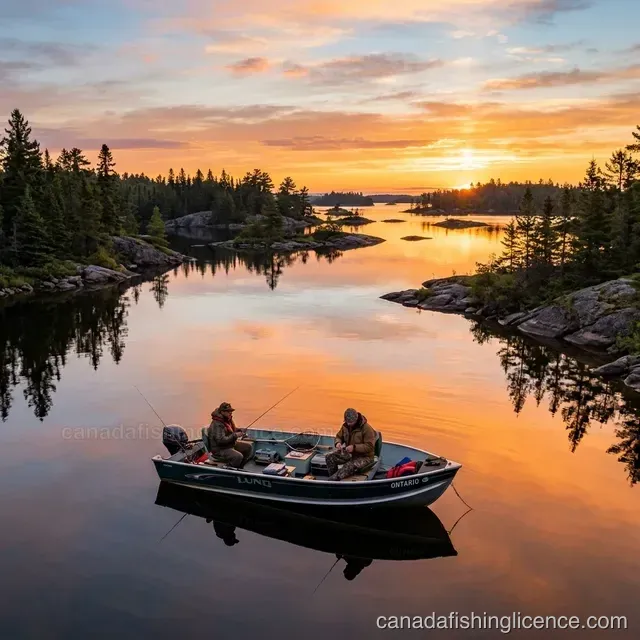
Destination Ontario’s Lake of the Woods guide is a good example of what makes a destination useful to traveling anglers. The lake is enormous, holds multiple game species, and gives you several realistic base towns and launch areas rather than one narrow point of entry.
The official destination guide highlights Kenora, Sioux Narrows, Nestor Falls, and Morson as common jumping-off points. It also notes the lake’s size, more than 14,500 islands, and nearly 105,000 kilometres of shoreline on the Canadian side. In practice, that means you can shape the trip around day-boat access, a lodge stay, a guide day, or a longer multi-day run.
This is the kind of water that works well for anglers who want options: walleye, bass, pike, muskie, and lake trout, plus a trip structure that can be as simple or as involved as you want. It is also the kind of water that rewards preparation. On a lake this large, navigation, weather, and local regulations matter just as much as fishing skill.
Alberta — The Bow River for Accessible Trout Water
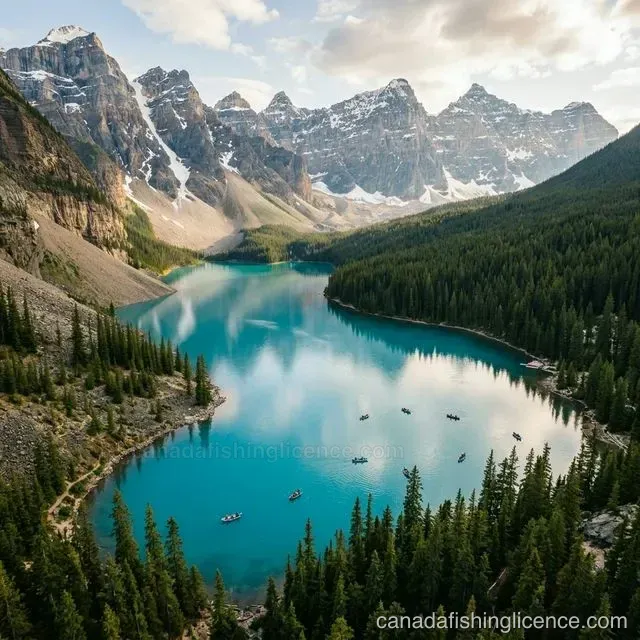
Travel Alberta’s Bow River listing is useful because it frames the river the way many traveling anglers actually need it framed: as a major trout river that runs through and around Calgary, with practical city access instead of a remote-only storyline.
If you want a trout-focused trip that does not require backcountry logistics, the Bow stands out for that reason alone. You can stay in Calgary, fish with a guide, and keep the trip simple. That makes it especially appealing for anglers who want a short trip, a first western Canada river, or a stop added onto a wider Alberta visit.
The main tradeoff is that this is not a casual “show up anywhere” river. River sections, flows, access points, and skill level still matter. For a trout river you can realistically build a trip around without going fully remote, the Bow belongs on the short list.
British Columbia — Terrace and the Skeena Region for Salmon and Steelhead Planning
HelloBC points anglers toward Terrace and the Skeena region when the goal is salmon and steelhead travel. The region is tied to the river, nearby tributaries, and charter or guided access rather than to one single stop on a map.
That makes the Skeena area a planning region more than a one-click “best spot.” It suits anglers who want a northern British Columbia trip built around salmon, steelhead, and big-river travel. It also suits people who are comfortable letting the river system shape the itinerary rather than expecting one fixed bank-access answer.
Before you lock the dates, remember that B.C. fishing splits into freshwater and tidal systems. If you are pairing river fishing with a saltwater day, or if salmon retention is part of the plan, sort out the licence path before you build the rest of the trip.
Quebec — Gaspesie Works Well When You Want a Structured Atlantic Salmon Trip
Tourisme Gaspesie publishes one of the clearer region-wide fishing overviews in Canada. The region markets sea, river, and lake fishing from spring to fall, and it highlights Atlantic salmon as a defining trip type. The same tourism material points anglers toward salmon rivers, guides, outfitters, ZECs, and reserve-based access rather than pretending the whole region fishes the same way.
That structure is exactly why Gaspesie works so well as a destination for anglers who want an Atlantic salmon trip with clear planning lanes. You can stay focused on one fishery, book local access properly, and build the trip around the river instead of improvising once you arrive.
It also means you should not treat the region as a single rule set. Salmon access, guided entry, river sectors, and local requirements vary. The trip goes better when you choose the river first and the accommodation second.
New Brunswick — The Miramichi Is a River Trip, Not Just a Name on a List
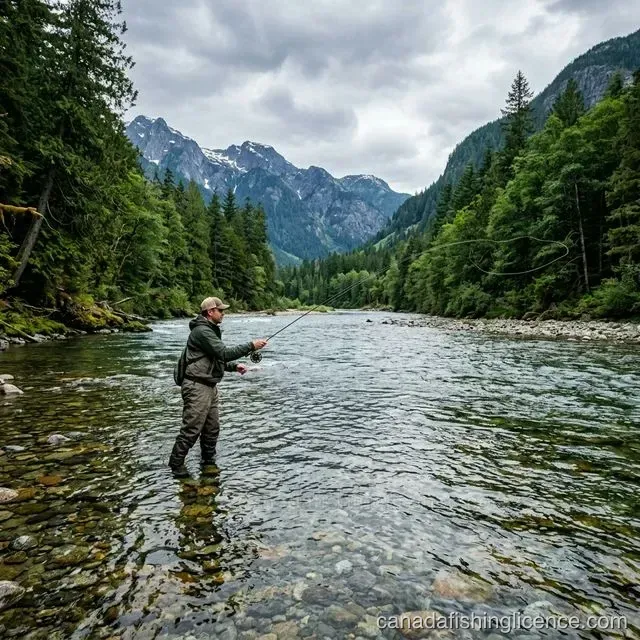
Tourism New Brunswick describes the Miramichi as a major Atlantic salmon destination and points visitors toward guides, lodges, and river communities rather than toward one generic access point. That is the right way to think about it.
The Miramichi is best planned as a river corridor. Your trip may center on a lodge, a guide, a private pool, a road-access stretch, or a multi-day stay in the valley. That flexibility is a big part of the appeal, but it also means the trip improves quickly when you decide what kind of salmon trip you want before you choose where to stay.
If you prefer river travel with a strong lodge-and-guide culture, the Miramichi is one of the clearest Atlantic options in the country. It also pairs well with a broader New Brunswick road trip, which is useful if the fishing is only one part of the visit.
Not Every Good Trip Needs a Famous Name
One of the easiest mistakes in destination planning is assuming every worthwhile trip has to revolve around a famous lake or river. If you are traveling with family, fitting fishing around work, or learning a new province, simpler access often wins.
Stocked lakes, park waters, city-edge access, and drive-to multi-species lakes are easier to research, easier to repeat, and easier to enjoy without wasting a day on logistics. For those trips, public fishing access, stocked lakes, and the season calendar may be more useful than another marquee-destination list.
Check the Licence Path Before You Book Anything
A lot of trip mistakes happen before anyone ever gets to the water. The accommodation is booked, the drive is planned, and only then does someone realize the fishing sits under a different licence system, a park permit, or local seasonal rules they had not read yet.
Let the destination choice narrow the licence choice, not the other way around. Provincial freshwater, B.C. tidal, national park waters, salmon-specific rules, and non-resident conditions can all change what makes sense for your trip. Sorting that out early gives you a more useful destination list than a broad “top ten” ever will.