| Check | What to confirm | Why it matters |
|---|---|---|
| Adult licences | Every adult who plans to fish has the right provincial licence or park permit. | Youth exemptions do not give the accompanying adult a fishing licence. |
| Child age rule | Know whether the child may fish free, whether an adult must accompany them, and whether their catch counts toward an adult limit. | This changes by province and by system. |
| Exact water | Open season, daily limit, bait rule, and any local restriction for the exact lake, river, zone, or park water. | The named water often matters more than the province headline. |
| Trip format | Shore, boat, dock, or ice. | Each format changes the safety gear you need. |
| Weather and exit plan | Wind, temperature, washroom access, and how fast you can get back to the car. | Family trips go better when leaving early is easy. |
Pack For A Short, Easy Trip First
A family fishing trip usually works best when you keep it simple: one easy waterbody, one short session, one small tackle setup, and a clear plan for food, shade, and a quick exit if the weather turns or the kids are done.
The five things that matter most are documents, basic fishing gear, safety items, child comfort items, and the right add-ons for your trip type. A calm two-hour shore trip needs a different pack list than a boat day or an ice-fishing afternoon.
If you are building a first-trip bag from scratch, do not start with a giant checklist. Start with the items that keep the trip moving: valid licences for the adults who need them, rods already rigged, pliers, sunscreen, water, snacks, a change of clothes for the children, and the correct flotation setup if you will be on a boat.
The Night-Before Check That Prevents Most Problems
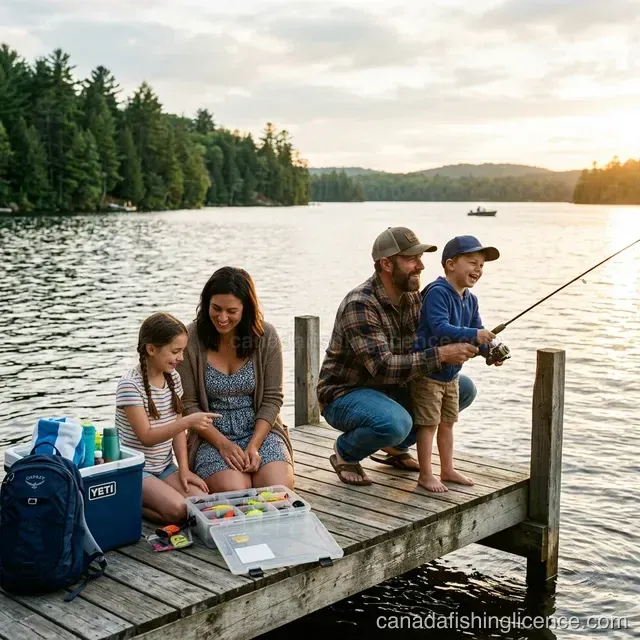
The cleanest way to avoid a rushed morning is to do one five-minute check the night before you leave.
If you will be fishing in a national park, make that part of the same check. Parks Canada uses its own fishing permit system, and provincial licences do not apply in park waters.
Core Fishing Gear - Keep The Setup Small And Reliable
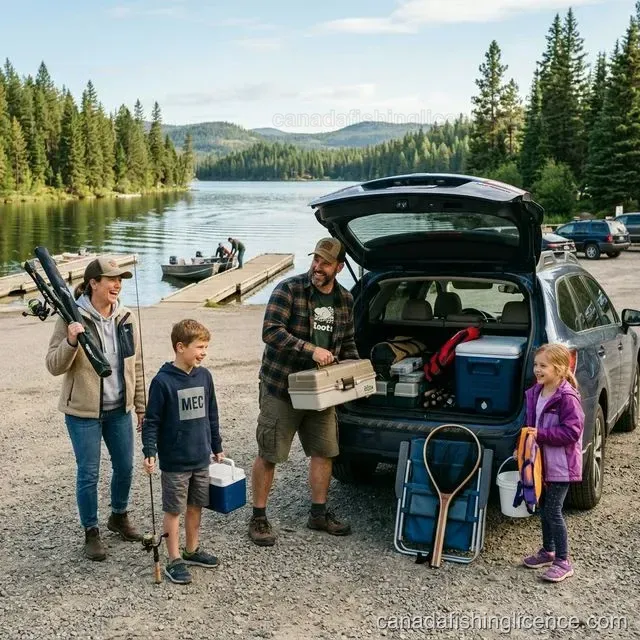
For a family trip, the best gear is the gear that stays untangled and is easy to replace on the spot. A small kit is usually better than a fully loaded tackle bag.
- One ready-to-fish rod for each person who will actually fish: if you have children, rig the lines at home instead of at the water.
- A simple tackle box: a few hooks, floats or bobbers, split shot, and one or two easy lures are enough for most beginner trips.
- Bait that matches the local rules: worms are often the easiest starting point, but some waters restrict live bait, so check first.
- Pliers or forceps: faster hook removal matters for both fish handling and family safety.
- Line cutters and spare line: children and beginners can lose time quickly to one bad tangle.
- A measuring tool: if you may keep fish, bring a ruler or tape so you can check local size limits instead of guessing.
- A landing net when you expect to release fish: a soft or knotless net is easier on fish and easier to manage beside children.
There is no prize for carrying every lure you own. On a first or second family trip, it is usually smarter to carry less gear and spend more attention on the children, the weather, and the water access.
Comfort And Safety Gear Often Matter More Than The Tackle
Most family trips do not end because the fish stop biting. They end because somebody is cold, wet, sunburned, hungry, or ready to leave. Pack for that first.
- Water and easy food: bring more water and snacks than you think you need, especially on hot or windy days.
- Sunscreen and hats: water reflects light, and children can burn quickly even on a cool day.
- Layers and spare clothes: one dry change of clothes can save the whole trip after a slip, splash, or rain shower.
- Closed-toe shoes or boots: better for wet rocks, docks, mud, and stray hooks than sandals or flip-flops.
- A compact first-aid kit: bandages, wipes, tweezers, and any family-specific medication should always be within reach.
- Hand wipes or a towel: bait, sunscreen, fish slime, and mud all pile up quickly on a family outing.
- Bug protection: a short evening trip can be much harder than a long morning trip if mosquitoes or blackflies are heavy.
If you are taking younger children, add one small bucket or container, one simple backup activity, and one towel. Those three items solve more family-trip problems than most extra tackle purchases.
Boating PFD Rules - What Transport Canada Actually Says
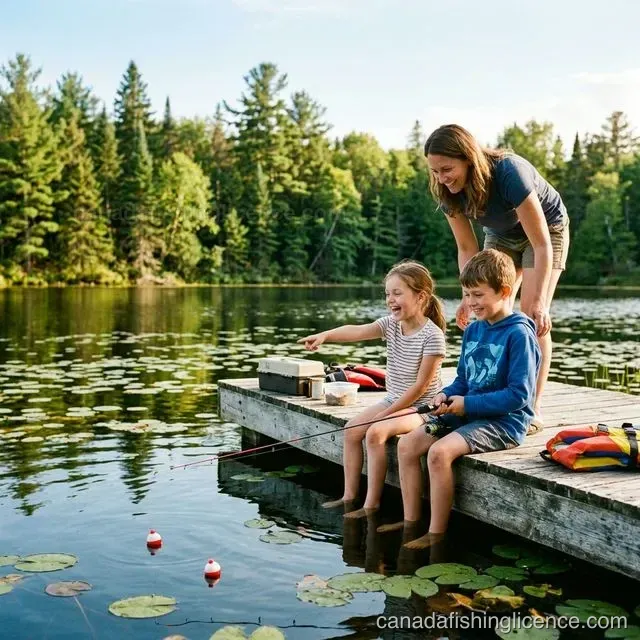
Transport Canada says you are required by law to have a lifejacket or personal flotation device on board for each person on a watercraft. For families, that is the starting point, not the finish line.
Transport Canada's child guidance is practical and specific: children should be within arm's reach and wearing a proper flotation device at all times. The device should fit snugly and should not ride up over the child's chin or ears.
| PFD check | Official guidance |
|---|---|
| Fit | There should be less than 7.6 cm (3 inches) between your child's shoulders and the device. |
| Child features | Look for a large collar for head support and a safety strap that goes between the legs. |
| Approval label | Use a device approved by Transport Canada, the Canadian Coast Guard, or Fisheries and Oceans Canada. |
| Inflatable devices | Inflatable PFDs are prohibited for people under 16 years of age or under 36.3 kg (80 lb). |
| Condition | Damaged, ripped, or badly worn flotation devices are not considered approved. |
For a family boat trip, it is worth doing a fit check at home before you load the car. The boat ramp is the wrong place to discover that last summer's lifejacket is now too small.
What Changes By Trip Type
The fastest way to overpack is to treat every trip like the same trip. Follow the core checklist above, then add only the extras your format actually needs.
| Trip type | Must-add items | Keep in mind |
|---|---|---|
| Shore or dock trip | Chairs or blanket, towel, spare shoes, easy snacks, simple backup activity | Choose easy access, shade, and a quick walk back to the car. |
| Boat trip | Correct PFD for each person, dry bag, extra layers, sun cover, spare phone power | Wind and spray can make children cold much faster than expected. |
| Ice-fishing trip | Insulated boots, hand warmers, extra gloves, hot drinks, shelter plan, headlamp | Families usually do better with a heated hut or a short, mild-weather session. |
If the trip involves a boat or ice, shorten your timeline even further for the first outing. A strong first experience matters more than squeezing in extra hours.
Build The First Trip Around Attention Span, Not Distance
A first family trip does not need to be remote or ambitious. It needs to be easy to manage. A small stocked pond, a calm dock, or an accessible lake edge usually beats a famous river with a long walk and difficult footing.
For younger children, a 90-minute to two-hour trip is often enough. For older children who already like the outdoors, a half-day can work well if there is food, shade, and a good place to sit. You can always stay longer if everyone is engaged.
Look for places with simple positives: safe shoreline, a washroom nearby, parking close to the water, and enough room for the group to spread out. Those details rarely sound exciting on paper, but they are the details that make families want to go again.
Check Official Beginner Programs Before Buying Too Much Gear
If you are unsure whether your children will enjoy fishing, try an official beginner program first. Ontario's Learn to Fish program is a good example. The province describes it as a free two-hour program with a practical teaching session and supervised fishing, and says it provides the rod, reel, bait, fishing licence, lifejacket, and sunglasses needed for the session.
Even if you are not in Ontario, that is a good model to look for. Check provincial park pages, local government fishing pages, or the park you plan to visit before you buy a full set of gear for every family member. A short official program can tell you very quickly what your family actually uses.
Printable Family Fishing Checklist
Documents: adult licence or park permit, child age ID if needed, local regulations for the exact water, weather check, offline map or directions
Core gear: rods already rigged, hooks, floats, split shot, bait allowed for that water, pliers, line cutters, spare line, measuring tool, landing net if needed
Safety: first-aid kit, sunscreen, hats, bug protection, water, towel, phone, approved PFDs if boating
Children: change of clothes, closed-toe shoes, snacks, wipes, spare layer, simple backup activity, small bucket or container
Trip-type extras: chairs for shore trips, dry bag and sun cover for boat trips, insulated gloves and boots for ice trips
If you pack only one thing from here into your routine, make it the night-before check. It does more to steady a family trip than any extra lure or accessory ever will.