| Question or situation | Short answer | What to check next |
|---|---|---|
| Fishing with kids in Canada, youth licence, or family limits | Start here when the trip depends on child age, adult licence status, shared limits, and first-trip safety. | Family-trip overview below. |
| Do kids, teens, or seniors need a licence? | The age guide is better for exemption thresholds than family-trip planning. | Age requirements |
| Family budget or adult licence cost | Adult licences, visitor products, and park permits can matter even when children fish free. | Cost by province |
| Family packing list, snacks, clothing, PFDs, or night-before setup | The checklist is better when you already know the licence path and need to pack for the outing. | Family trip checklist |
| Easy shore access, stocked ponds, docks, or beginner-friendly water | Pick access before ambition. Simple legal entry usually matters more than a famous destination. | Public fishing access |
| Free fishing weekend or low-cost first try | Check whether the province, residency rule, park boundary, or species still changes the free-day plan. | Free fishing days |
| B.C. tidal, national park, salmon, or special water | Treat special systems as a separate check before relying on a general youth exemption. | Federal vs provincial path |
| American or visiting family trip | Visitor rules can change shared limits, adult licences, and the buying path. | Guide for Americans |
Family Trips Start With The Child Rule And The Adult Licence
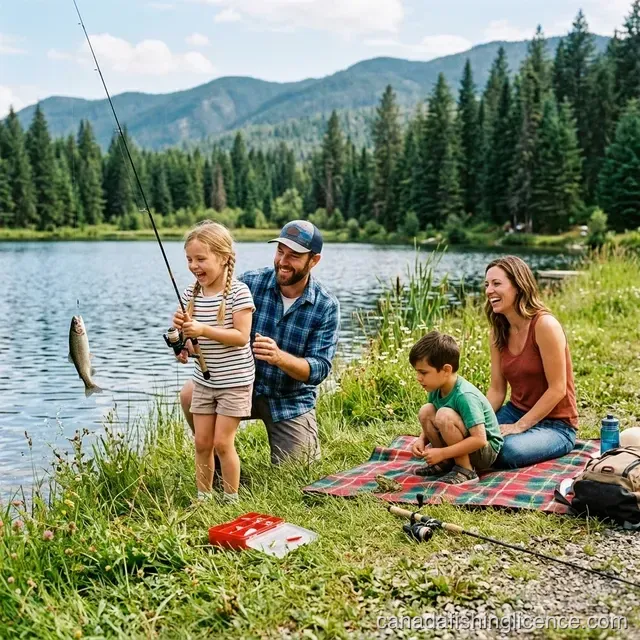
Most kids do not need their own fishing licence for many ordinary provincial freshwater trips in Canada, but there is no single national youth rule. The answer changes with the province or park system, the child's age, residency, and sometimes whether the child needs their own catch limit.
For most families, the practical starting point is simple: figure out which licence system applies first, then check the child rule inside that system. Provincial freshwater rules, B.C. tidal fishing, and national park waters do not all work the same way.
The other planning rule is just as important: if the adult plans to fish too, the adult should carry the correct licence or permit. A child's exemption is not a substitute for an adult's own licence.
Start With The Fishing System, Not Just The Child's Age
Families often want one answer to "Do kids need a fishing licence?" The cleaner question is "Which system are we fishing under?"
| Where you are fishing | What to check first | Why families get caught out |
|---|---|---|
| Provincial freshwater waters | Province, residency, youth exemption age, and whether the child gets their own quota. | The same child can have different rules in Ontario, Manitoba, Quebec, or B.C. freshwater. |
| B.C. tidal (salt) waters | DFO tidal licence rules, not provincial freshwater rules. | Families often assume a free freshwater exemption also covers salt water. It does not. |
| National park waters | Parks Canada permit rules for the specific park. | Provincial licences do not apply in national parks. |
Once you have the right system, the child rule becomes much easier to read. The examples below are the ones that most often change trip planning for families and visitors.
Examples That Actually Change Family Planning
| System | Rule on the official page | What it means for a family trip |
|---|---|---|
| Ontario residents and Canadian residents under 18 | Ontario says they do not need to buy an Outdoors Card or licence if they carry government-issued identification that shows their name and date of birth. Sport fishing limits apply in this situation. | A resident child can fish without buying a separate licence product, but they still need the right identification while fishing. |
| Ontario non-Canadian residents under 18 | They may fish without an Outdoors Card or licence if accompanied by a person who has a valid Ontario recreational fishing licence. Any fish kept count toward that licence holder's catch and possession limit. They may also buy their own Outdoors Card and licence to have their own limits. | This matters for visiting families from the United States or overseas: a free child trip and an independent child limit are not the same thing. |
| Manitoba resident under 16 | Manitoba's regulation and anglers' guide say a Manitoba resident under 16 may fish without a licence, must show proof of age if asked, and has the same privileges as a Regular Licence holder, including their own limit of fish. | Local families can plan around the child having a separate legal limit without buying a youth licence. |
| Manitoba Canadian resident or non-Canadian resident under 16 | They may fish without a licence only if they are with a licence holder or another exempt person, and fish they keep must be counted toward that accompanying person's limit. To have their own limit, they must buy a licence. | For visitors, Manitoba often turns into a "shared limit or buy a child licence" decision. |
| Quebec people under 18 fishing under an adult's licence | Quebec says children under 18 may fish under a licence holder's licence in the situations listed on the licence page, and each person usually has their own line. In all cases, the total fish caught and kept per day must not exceed the number authorized for the licence holder. | Quebec is a line-sharing and quota-sharing system unless the child qualifies another way. |
| Quebec residents under 18 with Pêche en herbe or Relève certificate | Quebec says they may fish without a licence, but any salmon caught must be released. | This is useful for local families using an introductory youth certificate. |
| B.C. freshwater residents under 16 | B.C. says residents under 16 do not need any freshwater licence or stamp, do not need to fish with a licence holder, and may keep their own quota of fish. | For B.C. resident families, freshwater youth planning is straightforward. |
| B.C. freshwater non-residents under 16 | They do not need a licence for fresh water, but they must fish with someone 16 or older who has the correct licences and stamps. Fish they keep count toward the accompanying adult's quota unless they buy their own licence and any required stamps. | For visiting families, B.C. freshwater can still become a shared-quota trip. |
| B.C. tidal waters | DFO says all recreational fishers in B.C. tidal waters need a valid tidal waters sport fishing licence. Annual juvenile licences for anglers under 16 are free, and a salmon conservation stamp is required for all ages if salmon are retained. | Saltwater in B.C. is the clearest example of why province-wide freshwater assumptions are not enough. |
| National parks such as Banff, Jasper, Fundy, and Kouchibouguac | Parks Canada says provincial licences are not valid in national parks. Current park pages say anyone under 16 may fish without their own permit if accompanied by a permit holder 16 or older, and the child's catch is then included within that permit holder's daily limit. | A family can move from a provincial licence rule to a permit-and-shared-limit rule simply by entering park waters. |
Those examples cover most of the family questions that change trip planning: whether the child may fish for free, whether an adult must be present, whether the child gets their own keep limit, and whether a separate licensing system applies.
When The Adult Should Buy Their Own Licence
For ordinary family trips, the safest planning rule is simple: if the adult plans to fish too, the adult should have the correct licence or permit. That applies whether you are shore fishing, sitting in a boat, or moving between more than one water system on the same trip.
This matters most in four common situations. First, a parent who wants to fish alongside the child should plan for their own licence, not rely on the child's exemption. Second, a child who is fishing under an adult's shared limit is not the same as a child with their own quota. Third, a B.C. family doing both freshwater and tidal fishing may need provincial freshwater planning for one day and a federal tidal licence for the next. Fourth, national park waters always deserve a separate permit check.
If you are trying to keep planning simple, make one decision early: is this a shared-limit family trip or a separate-limit family trip? Once you answer that, the licensing path is usually much clearer.
How To Make A First Family Trip Easier
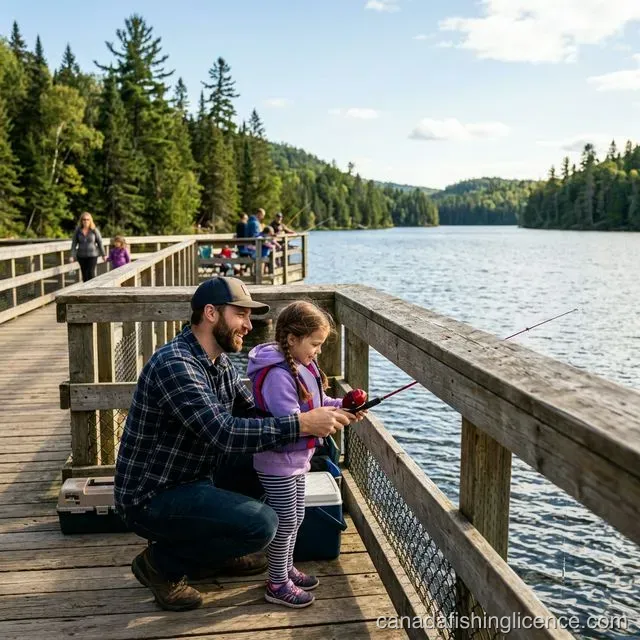
The best first trip is rarely the most famous spot. It is usually the easiest spot. Families do better at calm access points, stocked ponds, accessible docks, and small lakes with short walks from the car.
Ontario's Learn to Fish guide recommends keeping beginner gear simple and notes that children often do well with a shorter rod in the four-to-five foot range. That is good general advice beyond Ontario too. Shorter rods are easier to control, easier to carry, and less likely to tangle in bushes or overhanging trees.
For the first outing, choose a trip length the group can repeat: 90 minutes to two hours for younger children, or a relaxed half-day for older children who already enjoy being outside. Frequent bites matter more than big fish on day one, so calm water and easy species are usually the better family choice.
Safety On Shore, In Boats, And On Ice
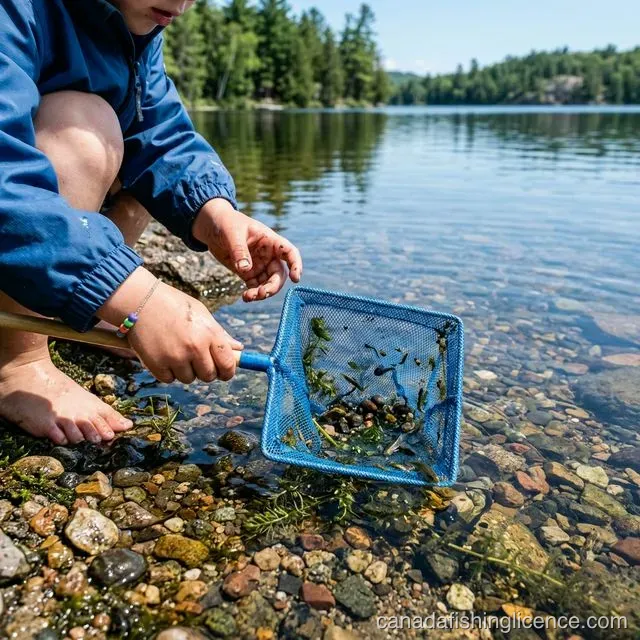
Family fishing safety is mostly about keeping the trip slow and readable. Choose stable footing, keep hooks and knives in one place, and avoid giving children too many tasks at once.
- On shore: closed-toe footwear, spare clothes, and a clear boundary near the water go a long way.
- In a boat: Transport Canada requires a lifejacket or PFD on board for each person on a watercraft. It also says children should stay within arm's reach and wear a proper flotation device at all times. Inflatable PFDs are prohibited for people under 16 years of age or under 36.3 kg (80 lb).
- On ice: shorten the session, bring extra gloves, and make warmth part of the plan rather than an afterthought. Families usually do better with a mild day or a heated shelter than with a long open-ice session.
You do not need a dramatic safety plan for every family trip. You do need one adult who is paying attention to gear, footing, weather, and when it is time to stop.
Official Programs Can Make The First Trip Much Easier
Ontario's Learn to Fish program is one of the clearest official examples. The province describes it as a free two-hour program with a one-hour teaching session and one hour of supervised hands-on fishing, and says it provides the rod, reel, bait, fishing licence, lifejacket, and sunglasses needed for the session.
Quebec's licence page is also worth knowing if you live there. It says residents under 18 who hold a Pêche en herbe or Relève certificate may fish without a licence, although any salmon caught must be released.
Even if you fish somewhere else, those two examples show the right mindset for a first trip: use official beginner pathways when they exist, keep the gear list small, and let the child decide whether they want a bigger trip after a simple one goes well.