Free Fishing Days Are Real, and You Should Use Them
Most Canadian provinces offer at least one licence-free fishing day or weekend each year. These events are meant to make a first trip easier and cheaper.
But most first-timers show up unprepared: wrong spot, no gear, no idea what to do. This is a practical action plan to turn a free fishing day from "I stood by the water for an hour" into "I actually caught a fish." For the full schedule of dates, see the 2026 Free Fishing Days guide.
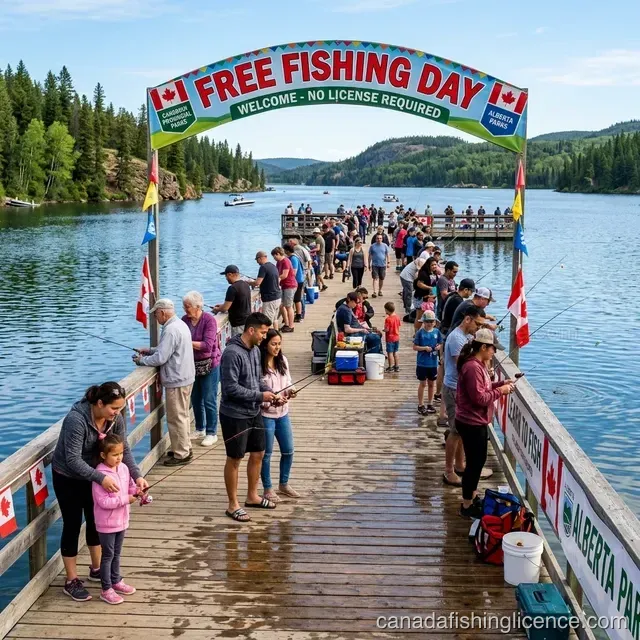
What "Free Fishing" Actually Means (and What It Doesn't)
You DO get: The right to fish without purchasing a licence. All other rules still apply — catch limits, size limits, seasons, gear restrictions, and bait rules are the same as any other day.
You DON'T get: A relaxation of any other regulation. Some people think free fishing day means "fishing Wild West" — it absolutely does not. Conservation Officers are often more active on free fishing days because of the crowds.
You still need: A national park fishing permit if you are fishing in a national park, because free fishing days only waive the provincial licence. In Ontario, carry government-issued ID showing your name and date of birth during the free periods. Check your province's specific event page for the current conditions.
The 2-Week Prep Plan
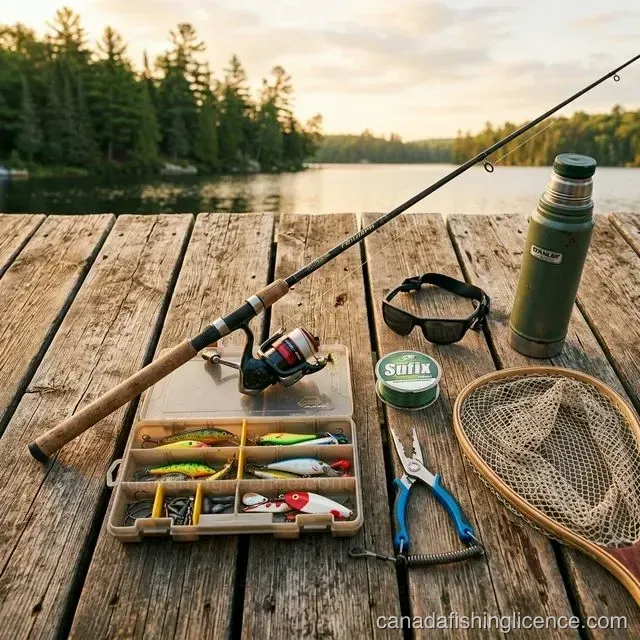
Do this in the two weeks before your free fishing day:
2 weeks before — Pick your spot. Choose a lake, river, or pier within 30 minutes of home. Use the public access guide to find spots. Best bets for beginners: municipal piers, provincial park shorelines, and stocked urban ponds. Avoid remote backroad lakes — you want amenities (parking, washrooms, maybe a tackle shop nearby).
1 week before — Get gear. If you don't have gear, you have options: (1) Borrow from a friend or family member. (2) Buy a basic spincast combo ($25-$40 at Canadian Tire). (3) Many provinces run "loaner rod" programs at participating parks — check your provincial parks website. (4) Some tackle shops rent full setups for $10-$20/day.
3 days before — Check the regulations. Look up your target water body in the provincial regulations. Confirm: Is the species you want in season? What's the catch limit? Any gear restrictions? Doing this now means you won't panic when a CO does a friendly check on the free day.
Night before — Buy bait and pack. Stop by a tackle shop or Canadian Tire for live bait (worms are universal). Pack using the family fishing checklist. Charge your phone. Check the weather and dress in layers.
Where to Go — Best Spots for Free Fishing Day
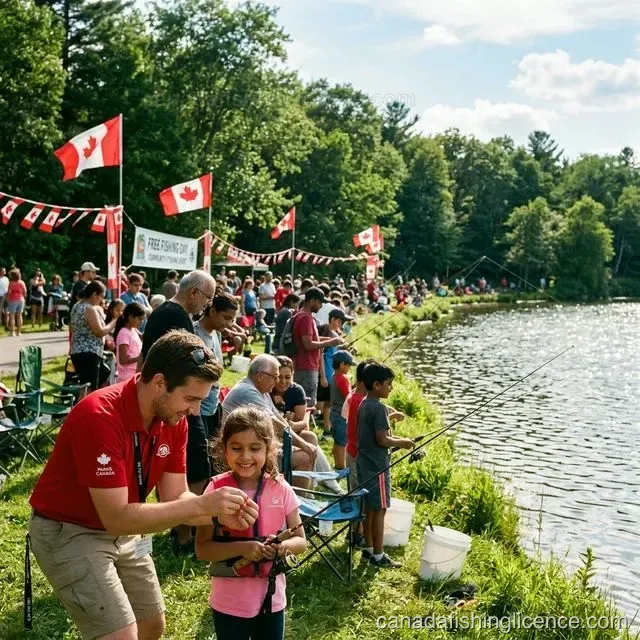
Not all fishing spots are equal on free days. Here's the strategy:
Best: Stocked urban ponds and city lakes. Many municipalities stock ponds with rainbow trout or brook trout specifically before free fishing weekends. These fish are hungry, inexperienced, and cooperative. Check your city's parks and recreation website for stocking announcements — some post the exact date and number of fish stocked.
Great: Provincial park day-use areas. Maintained shoreline access, parking, washrooms, and often a park naturalist running a fishing clinic on free days. Arrive early — parking fills fast.
Good: Municipal piers and breakwalls. Easy access, no boat needed, and usually fish-able for panfish (perch, sunfish, crappie) with basic gear. The fish won't be huge, but you'll get bites.
Avoid: Popular trophy lakes. The serious anglers know every boat launch, and free fishing day adds crowds to already-busy spots. Unless you have boat access and experience, skip the big-name lakes on free days.
Avoid: Remote spots with no cell service. Great for regular fishing, but on your first trip you want nearby amenities and other people around in case you need help.
Day-Of Strategy — Maximize Your Chances
Arrive early. Get to your spot by 7-8 AM. Fish are most active in the first 2-3 hours after sunrise. You'll also beat the crowds — by 10 AM, popular spots can be shoulder-to-shoulder during free fishing events.
Keep it simple. For your first fish, use a basic setup: bobber + split-shot sinker + size 6 hook + worm. Cast near structure (docks, fallen trees, weed edges, rocks). Set the bobber so your bait sits 2-3 feet below the surface. Wait for the bobber to dip or move sideways. Set the hook with a firm wrist snap.
Talk to the regulars. If you see someone who clearly knows what they're doing, ask: "What's working today?" Most anglers love helping beginners — especially on free fishing day, when the whole point is getting new people into the sport.
Move if nothing's biting. Give each spot 20-30 minutes. If no bites, move 20 metres and try again. Fish concentrate in specific areas — finding them is half the battle.
Take photos of everything. First cast, first bite, first fish (no matter how small), the scenery, the snack break. These photos are the memories that make you come back for a second trip — and maybe buy a licence.
Common Mistakes to Avoid
Mistake #1: Waiting until the day to figure everything out. "I'll just go to the lake and figure it out" leads to 2 hours of confusion. Spend 15 minutes the week before on YouTube watching "how to rig a simple bobber setup" — it makes all the difference.
Mistake #2: Ignoring the regulations. "It's free fishing day, anything goes" is wrong. You can still get fined for keeping undersized fish, exceeding catch limits, or fishing a closed species. The licence requirement is waived, nothing else.
Mistake #3: Bringing too much gear. You need one rod, a small tackle box, bait, and a bucket. First-timers who show up with an entire bass-tournament rig spend more time untangling than fishing.
Mistake #4: Giving up too early. If you haven't caught anything in 45 minutes, it's tempting to leave. Move spots instead. Change bait. Try a different depth. Fishing patience is a learned skill — even 10 minutes of sticking with it builds the habit.
Mistake #5: Not bringing snacks and water. Hungry, dehydrated first-timers don't become second-timers. Pack like you're going on a picnic that happens to involve fishing.
After the Free Day — What Next?
If you enjoyed yourself (even a little), buy a licence. A full-season Conservation licence in Ontario is $8.68 — less than a coffee and a muffin. Most provinces are under $30 for residents. It opens every lake and river in the province for the entire season.
Start with the provincial licence and the simplest gear that worked for you on the free day. You don't need to upgrade anything. The fish don't care about your equipment — they care about bait and location.
Join a local fishing Facebook group or Reddit community for your province. Post your free-day catch (no matter how small). You'll get encouragement, location tips, and gear advice from people who remember being exactly where you are.
Check the licence path guide if you are not sure which province, licence class, or exemption applies. Once you know that, use the official portal links.