| Document | What it does | What it does not do |
|---|---|---|
| Fishing licence or permit | Lets the angler fish in the correct inland, tidal, or park system. | It does not prove you may operate a motorized boat. |
| Pleasure Craft Operator Card or other accepted proof of competency | Shows the operator meets the boating competency rule for many motorized pleasure craft. | It is not a fishing licence. |
| Pleasure Craft Licence or vessel registration | Identifies the boat in the way Transport Canada requires for many powered craft. | It does not replace the fishing licence or the operator card. |
A Boat Does Not Create A New Fishing Licence, But It Can Add Boat Rules
Fishing from a boat does not usually require a special fishing licence category by itself. The fishing side still follows the same water-based rule: inland provincial water, B.C. tidal water, or national park water each use their own fishing-permit path.
What changes is the boat side. If you are operating a motorized pleasure craft, Transport Canada can require separate boating competency or boat-identification documents. Those are real legal requirements, but they are not fishing licences.
Keep the paperwork split into two questions: what licence do I need for the fishery and what documents do I need to operate this craft.
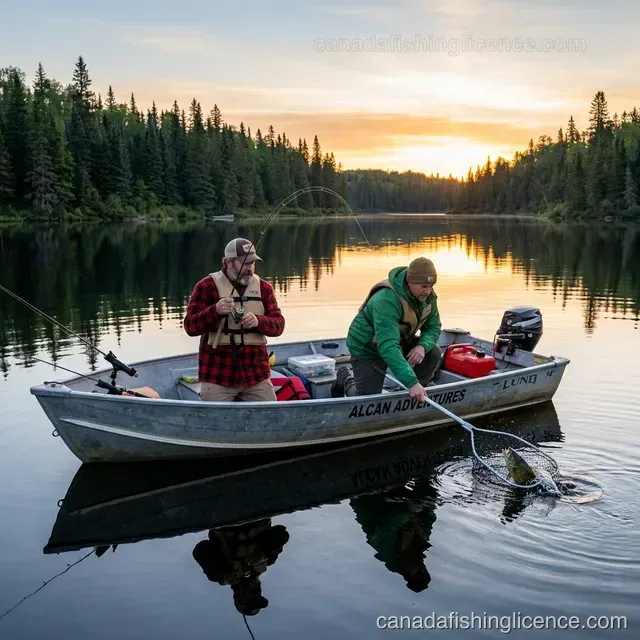
The Three Documents People Mix Up Most Often
Once those three documents are separated in your mind, boat-fishing compliance becomes much easier.
The Fishing Licence Still Follows The Water
If you launch a boat on an inland Ontario lake, the fishing side is still an Ontario fishing licence question. If you fish a B.C. tidal inlet, the fishing side is still the federal B.C. tidal licence system. If the day is inside a national park, Parks Canada still uses its own permit path.
In other words, being on a boat does not move you into a special national “boat fishing licence” system. The water still decides the fishing document.
This is the part that matters most for visitors: a charter, rental, or private boat changes how you get on the water, but not the underlying fishery system that governs the trip.
When The Operator Needs Proof Of Competency
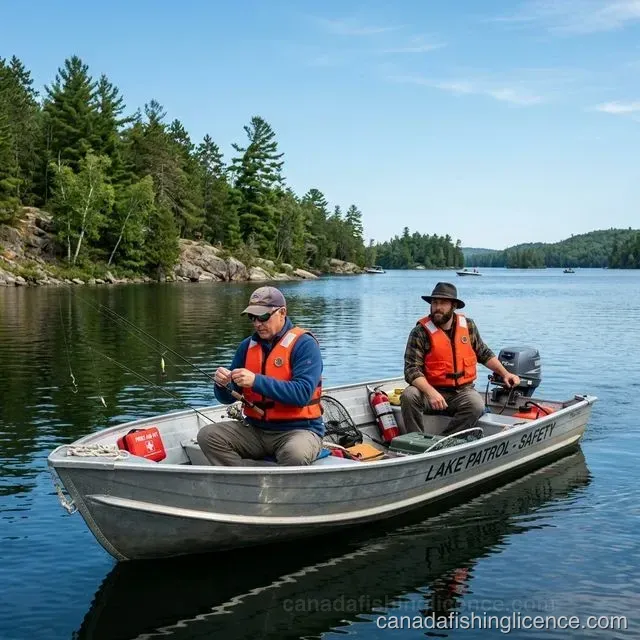
Transport Canada’s competency rules apply to operators of pleasure craft fitted with a motor. The requirement is about the person driving or controlling the boat, not every passenger on board.
Transport Canada also says this rule applies to boats fitted with a motor, even if the motor is not in use at the time. That is why small fishing boats with outboards, many aluminum boats with electric trolling motors, and other motorized setups should be treated as boating-competency questions as soon as someone is operating them.
The most familiar proof is the Pleasure Craft Operator Card (PCOC), but Transport Canada also recognizes some other accepted forms of proof in specific situations. A paper or electronic copy of a PCOC is not the same as carrying the card. For the card-focused path, check the PCOC boating card guide after you know who will operate the boat.
When You Usually Do Not Need A Boat Operator Card
Transport Canada says you do not need proof of competency to operate a non-powered pleasure craft. That covers many common fishing situations such as canoes, kayaks, and other craft with no motor attached.
That is an important distinction for anglers because a paddle-only trip can be much simpler from a paperwork point of view. You still need the right fishing licence for the water, and you still need the required safety equipment, but the boating-competency layer is usually gone.
This is one reason small human-powered fishing trips remain one of the easiest ways to keep Canadian fishing paperwork clean and predictable.
Visitors, Foreign Boats, And Rental Boats Follow Their Own Rules
Transport Canada gives two visitor rules that matter a lot for fishing trips.
Visitors using their own pleasure craft in Canada for less than 45 consecutive days: Transport Canada says the Canadian proof-of-competency rule does not apply in that situation, but proof of residence must be on board. If the visitor operates in Canada for more than 45 consecutive days, or operates a Canadian-licensed or Canadian-registered craft, including a rented or chartered boat, the non-resident proof rules can apply.
Rental boats: Transport Canada lists a completed rental-boat safety checklist as one acceptable proof of competency for non-residents and notes that it is good only for the rental period.
Short visitor trips and rental-boat trips should be planned differently. They may fish the same water under the same fishing rules, but the boating paperwork can be different.
If the same private boat is crossing the Canada-U.S. border, split the paperwork question from the border question. Check the border gear guide for bait, fish, boat reporting, declarations, and return-trip reporting.
Young Operators Need A Separate Age Check
Transport Canada places age and horsepower limits on young operators in most of Canada. Without direct supervision, youth under 12 are limited to boats up to 10 hp, youth aged 12-15 are limited to boats up to 40 hp, and operators under 16 may not operate a personal watercraft.
These rules do not apply the same way in every part of the country. Transport Canada notes that the age restrictions do not apply in the Northwest Territories or Nunavut.
For family fishing trips, the safe habit is to treat a young person operating the boat as a separate compliance question. Even if the fishing licence side is easy, the operator side may still need an age and horsepower check first.
Pleasure Craft Licence Versus Vessel Registration
Many powered fishing boats also need an identification document for the craft itself. Transport Canada says a Pleasure Craft Licence is required for a recreational pleasure craft that has one or more engines totalling at least 10 horsepower and is principally operated and maintained in Canadian waters, unless the craft is registered.
Transport Canada now says new, transferred, and renewed Pleasure Craft Licences are valid for 5 years. Older licences without an expiry date now have an expiry date, and licence information must be updated within 30 days when it changes. The federal fee page also says fees may change each year on April 1.
The practical point is simple: if your fishing boat is powered, check the operator-competency rule and the boat-identification rule separately. They are related, but they are not the same document.
Small-Boat Safety Gear Still Matters Even On A Short Fishing Run
Transport Canada’s Safe Boating Guide sets the equipment rules by boat type and size. For many small fishing boats, the common basics include a properly sized lifejacket or PFD for each person, a buoyant heaving line, a sound-signalling device, and a bailer or manual bilge pump, with other items added depending on the craft size, propulsion, and equipment.
Human-powered craft have their own version of this checklist. Transport Canada’s guidance also covers what paddle craft must carry, and that matters for anglers who fish from canoes and kayaks because the paperwork is lighter but the safety requirements are still real.
A simple habit is to match your fishing boat to the current Transport Canada list before the season starts rather than treating safety gear as something to sort out at the launch.
A Simple Planning Order For Boat Fishing Trips
For the shortest route to a clean boat-fishing setup, follow this order every time:
| Step | Question |
|---|---|
| 1 | What water or fishery system am I fishing? |
| 2 | Do I already have the correct fishing licence or permit for that water? |
| 3 | Is the craft motorized, and if so who is the operator? |
| 4 | Does the operator need a PCOC or other accepted proof of competency for this trip? |
| 5 | Does the craft need a Pleasure Craft Licence or registration, and is the safety gear complete? |
That order keeps the fishing side and the boating side separate, which is exactly what makes these trips easier to manage.